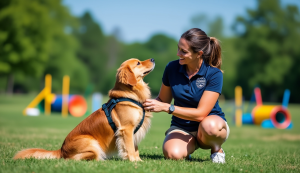

Puppy training works best when it starts with simple routines, clear expectations, and short practice that fits daily life. The goal is not to make a puppy perfect right away. The goal is to help the puppy understand how to live with people before unwanted habits get stronger.
For owners in Raleigh and surrounding areas, NC K9’s puppy training program focuses on useful foundations: attention, confidence, obedience basics, leash habits, recall, and calm household routines.
Start With the Daily Routine
Puppies learn from repetition. Feeding times, potty breaks, crate time, play, rest, and short training sessions all teach the puppy what normal life looks like. A predictable routine helps prevent confusion and gives the owner more chances to reward the behavior they want.
That does not mean every minute has to be scheduled. It means the puppy should get consistent feedback. If jumping, biting, barking, or dragging on the leash sometimes works and sometimes doesn’t, the puppy has no clear rule to follow.
Teach Attention Before Asking for Too Much
Many puppy problems start because the owner is asking for control before the puppy understands how to pay attention. Name recognition, coming when called, following food or a toy, and calmly checking in with the owner are small skills that make everything else easier.
Short sessions work better than long lectures. A few focused minutes several times a day can build more progress than one long session after the puppy is already tired.
Leash and Recall Foundations
Leash walking starts with teaching the puppy that staying near the owner pays off. Recall starts the same way: the puppy should learn that coming back is valuable, safe, and worth repeating.
These skills should be built carefully. A puppy that is dragged through distractions or called only when fun ends may learn to ignore the owner. A puppy that gets rewarded for checking in and returning is more likely to build the habit you want.
Confidence Without Chaos
Exposure is useful, but flooding a puppy with too much noise, pressure, or uncontrolled interaction can backfire. Confidence grows when the puppy can experience new things at a level they can handle.
That may mean calm observation, controlled introductions, short outings, and enough rest afterward. The point is to help the puppy think, not just endure.
When to Get Professional Help
Professional help is useful when the puppy is struggling with biting, fear, leash behavior, overexcitement, recall, household boundaries, or early signs of reactivity. It is also useful for owners who want a clearer plan from the beginning.
If the main problem is distress when your puppy is left alone, read NC K9’s guide to puppy separation anxiety for signs to watch and how to build alone time gradually.
NC K9 serves dog owners in Raleigh and surrounding areas with dog training programs built around the dog in front of the trainer. If you’re not sure where to start, contact NC K9 to discuss your puppy and the next right step.