When an agency asks whether it needs a single-purpose or dual-purpose police K9, we usually need to back the conversation up. What job does the agency need the team to perform?
If that answer isn’t clear yet, choosing the dog is too early. A breed, a program label, or a longer capability list can’t define the operational need for you.
Write the Job Before You Talk About the Dog
Start with the capability the agency is missing. Where will the team work? Who will handle the dog? What other duties will that handler carry? How much training time can the agency protect after the initial course is over?
Those questions aren’t paperwork around the decision. They are the decision. A dog can arrive with good training, but the agency still has to build and maintain the team.
When One Purpose Is Enough
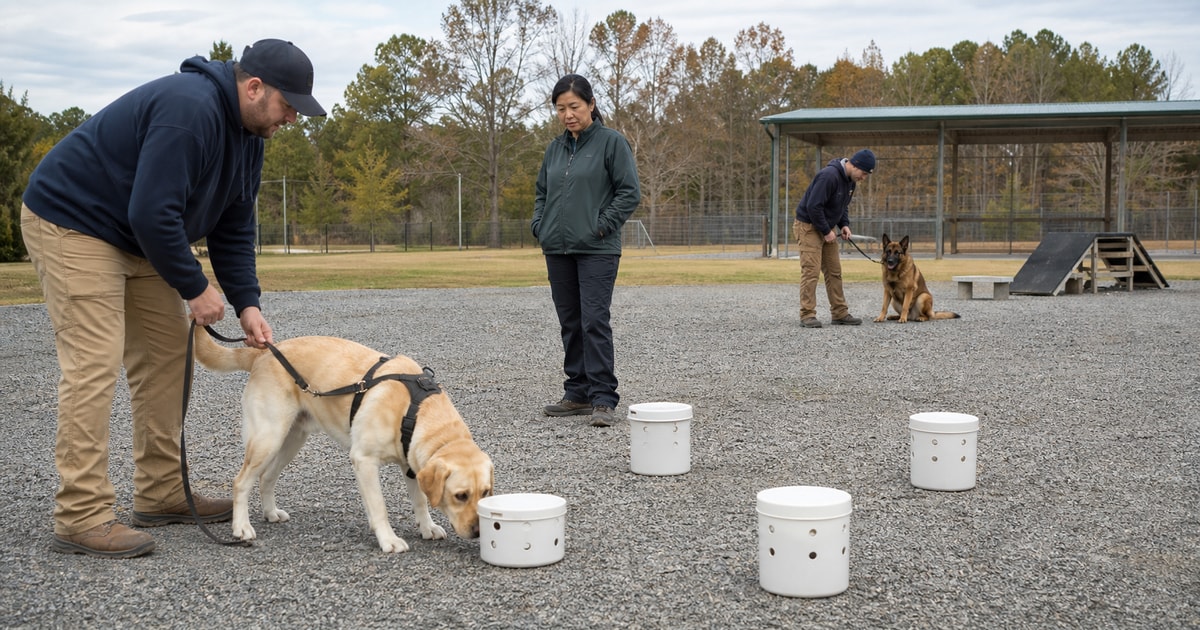
A single-purpose K9 has one primary operational function. At NC K9, the current single-purpose options include narcotics detection, explosives detection, and cell-phone detection for correctional institutions.
This path makes sense when the agency has a focused capability gap and doesn’t need the same team to carry a second assignment. The narrower role doesn’t make the work maintenance-free. Detection still has to hold up across the environments, distractions, and conditions the team will actually encounter.
What it does mean is that the training plan can stay centered on the one job the agency selected the team to perform.
When the Assignment Truly Requires More
A dual-purpose K9 is developed for more than one operational function. That can give an agency broader capability within one handler-dog team, but only if the job really calls for it.
More functions also mean more skills to maintain, more places for performance to drift, and more demand on the handler’s training time. Limited staffing can make a broader role look attractive, but that same staffing problem may make it harder to protect the time each discipline needs.
So the rule is simple: if the written need contains one primary function, begin with a single-purpose discussion. If the assignment genuinely requires more than one function from the same team, and the agency can support the maintenance, discuss a dual-purpose K9. Don’t choose more dog than the agency can keep ready.
Breed Comes After the Job
NC K9’s current program information lists German Shepherds, Belgian Malinois, Dutch Shepherds, and Shepherd-Malinois crosses among the dogs that may be used for dual-purpose work. Single-purpose candidates may also include Labrador Retrievers and other sporting breeds with suitable drive.
That doesn’t mean every dog of a listed breed fits police work. The individual dog has to fit the assignment. Ask how the dog was selected, what work has been developed, what handler instruction is included, and what the agency will need to continue after training.
Be Ready to Explain the Agency’s Side of the Team
A useful first inquiry includes the intended assignment, normal working environment, handler situation, and available maintenance support. That gives the trainer enough context to discuss whether a single-purpose or dual-purpose path makes sense.
If an existing team needs focused work, NC K9’s Training Seminars include tracking, scent detection, decoy work, and problem solving.