If your dog pulls a paw away, start by teaching that paw contact can be brief, predictable, and easy to end. Holding tighter may get today’s task done, but it doesn’t help your dog feel comfortable with having a paw handled next time.
Paw handling is often rushed because the practical need feels urgent. Nails grow. Mud gets tracked inside. A cut needs to be checked. But “let me touch your paw” is not one event from the dog’s perspective. Reaching, touching a leg, lifting a paw, separating toes, seeing a tool, hearing a clipper, and feeling pressure are different steps.
Find the first step that changes the dog
Work when nothing needs to be trimmed. Sit beside the dog rather than leaning over them. Begin higher on the shoulder or leg if that contact is already comfortable, and watch for the earliest change: turning the head away, shifting weight, closing the mouth, pulling back, or losing interest in a reward.
That first change is more useful than waiting for a struggle. That’s the step to make easier before you try anything more. A sudden new sensitivity, swelling, heat, limping, a damaged nail, or pain when walking needs veterinary attention before handling practice.
Build a voluntary paw-rest
- Offer an open hand low enough that the dog can investigate without being reached for.
- Reward any comfortable approach or brief paw contact your dog offers.
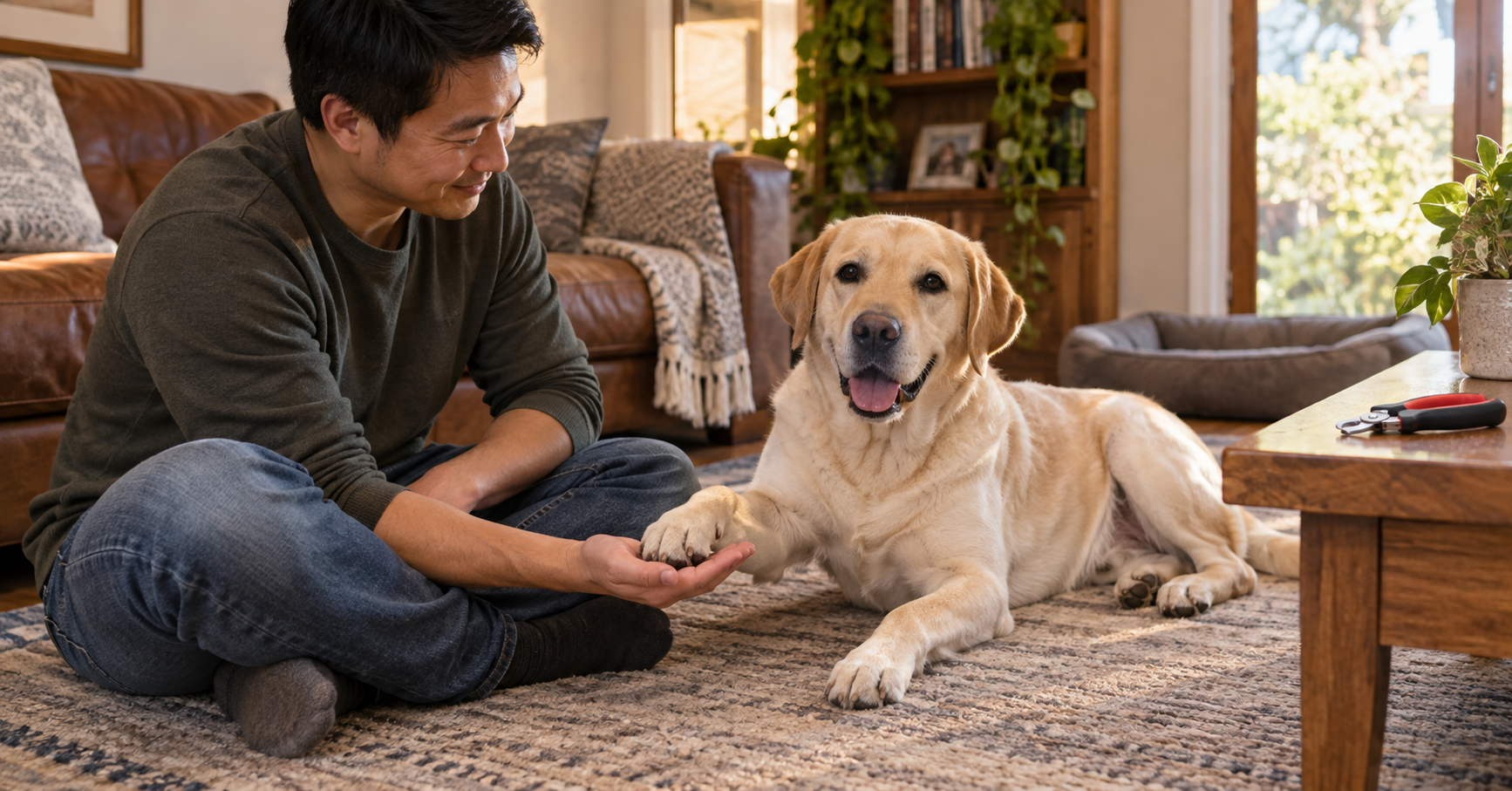
- When the paw rests in your hand, support it without squeezing, then release it before the dog has to pull away.
- Gradually add one small action: a one-second hold, a thumb touching one toe, or the closed tool appearing at a distance.
- Return the paw to the floor and give the dog a real pause between repetitions.
The closed nail tool is not a signal to skip straight to cutting. Fear Free’s home nail-care guidance similarly separates paw handling, tool exposure, sound, and actual nail work while emphasizing the dog’s body language. Your dog may be comfortable at different steps on different days.
Use a stop rule you will honor
Decide beforehand what makes you stop: two pullaways, a body that becomes stiff, refusal of a normally valued reward, or your own frustration. A stop rule keeps one necessary care task from becoming a contest.
Children should not perform nail-care practice or hold the dog in place. If there is bite risk, guarding, panic, or a medical need that cannot wait, speak with your veterinarian and an appropriately qualified behavior professional about a safe plan. Online instructions cannot determine whether a particular dog can be handled safely.
Measure comfort, not just completion
Write down the last comfortable step, not only the number of nails completed. “Rested paw for three seconds while closed clippers were on the table” gives you a repeatable starting point. “Wouldn’t let me finish” tells you only that the final request was too difficult.
Our guide to preparing for a dog-training evaluation can help you organize observations before asking for assistance. Bring the exact handling sequence, any health information from your veterinarian, and the point where the dog’s comfort changes. Those details will help the trainer understand what your dog can handle before the next trim is due.