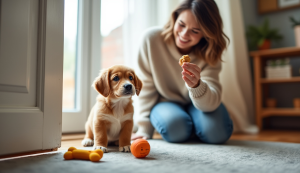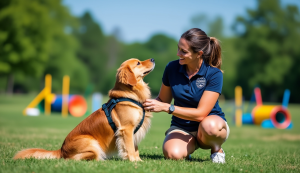
You’re trying to reward something your dog did well, and the treat ends up hurting your fingers. After a few of those, it’s hard to reach in confidently; you may find yourself pulling the food away just as your dog goes for it. I’d change how the reward arrives before asking either of you to repeat that exchange.
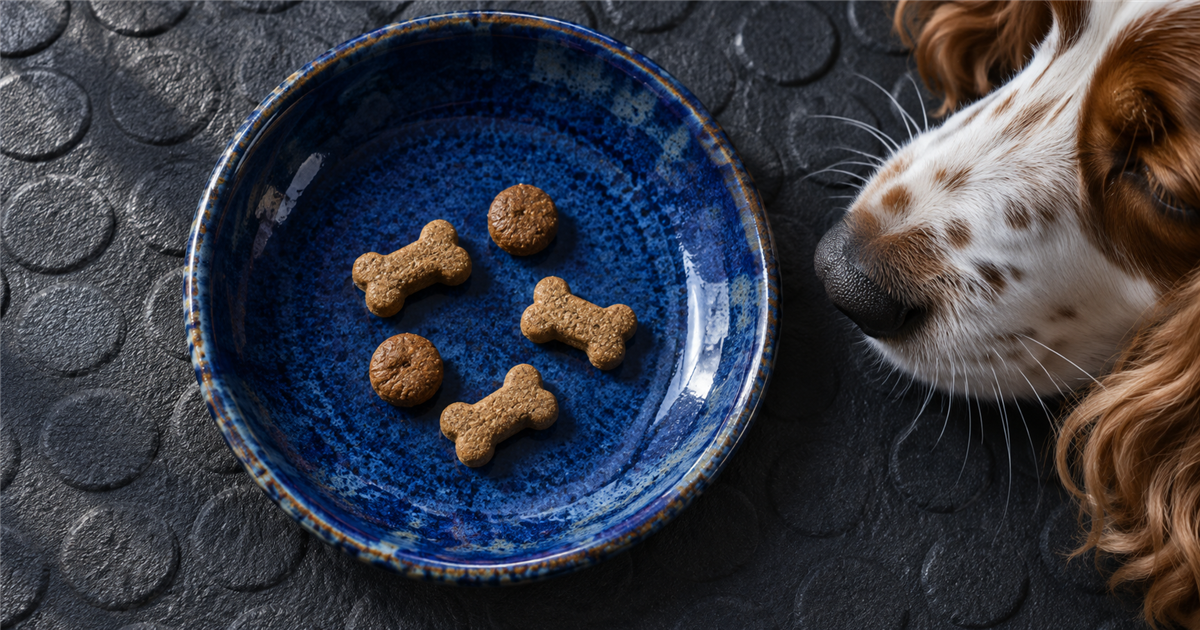
You can keep rewarding your dog while you work out the hand-feeding part. A dish, with the food placed before the dog approaches, may give you an option that doesn’t put your fingers beside their teeth. The choice needs to fit what you’re teaching, though.
Putting food on the floor moves the dog, so it can work after a release or between active repetitions. It may undo a lesson about remaining in a sit. If you need to reward stillness, pause that exercise and arrange delivery your dog can reach safely without leaving position. Our reward-placement guide explains that distinction.
Notice when taking food gets rough
Does it happen in a quiet room, or only when the toy comes out or another dog passes? Your dog may take food gently at home and grab it beside a busy sidewalk. If taking the treat gets rough when they’re excited or showing signs of worry, choose a quieter setting before practicing hand delivery again.
Also watch your hand. A treat held high can invite reaching up, and a hand that darts away can create a moving target. Bring food within comfortable reach instead of making the dog chase your fingertips. Use food appropriate for your dog’s size and dietary needs; don’t solve a delivery problem by offering pieces they struggle to chew or swallow.
These observations don’t establish a diagnosis. New mouth discomfort, unusual difficulty eating or a sudden change in how your dog takes food warrants veterinary advice. Stiffening, guarding food or threatening behavior is a different safety problem from clumsy treat taking; stop hand-feeding practice and seek individual help. Our resource-guarding guide describes that boundary.
Practice only where your hands are already safe
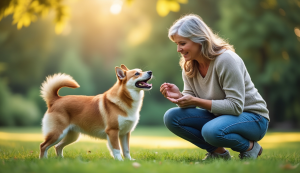
For a dog who can take food without injuring you in a quiet setting, try one treat resting on a still, open palm, with fingers together and clear of the food. Let the dog approach rather than pushing your hand into their mouth. The useful moment is a gentle taking that you can comfortably repeat.
If teeth contact your skin, stop the attempt. For the next repetition, place the reward in a dish before your dog approaches, and keep your hands away while they eat. Return to hand delivery only if you can do it comfortably and safely. Don’t hold a closed fist in place while the dog bites, and don’t flick their nose or grip their muzzle. If you can’t remove your hand safely, hand-feeding practice isn’t the right home exercise. A trainer can help choose a method and delivery tool without putting you in that position.
The AKC discusses rough treat taking as a skill that can be taught. That doesn’t mean every owner should practice with exposed fingers. It’s reasonable to keep using a dish and get help with the hand-feeding part.
Take the easy version into the next lesson
After a few comfortable deliveries, return to one simple behavior your dog already knows. Keep the room quiet and the reward hand steady. If the mouth becomes rough again as soon as you add the exercise, reduce the excitement or go back to your safer delivery method. Gentleness in a separate practice doesn’t automatically transfer to every training situation.
Keep children out of this exercise, and don’t use skipped meals to make a dog work through it. For now, choose the delivery that protects your hands and preserves the lesson you actually intended to teach. You can make progress without making every reward a risk.