Where you deliver a reward affects how your dog moves after a correct response. Give it where the dog can remain in the position you want, or deliberately release and reset them. Even if you mark the right moment, your dog may get up or turn to follow the hand bringing the food.
I’d check this when your dog seems to understand the cue but moves as soon as you reach for the reward. Your dog sits, then twists toward your pocket. They lie down, then stand to meet your hand. They walk beside you, then swing across your legs to collect the treat. Before adding another command, I’d look at the route the reward takes.
Choose what should happen after the marker
A marker is a brief signal, such as a familiar “yes” or a click, that tells your dog which action earned the reward. Marking the sit and delivering the food are two parts of the lesson. Watch both.
There are two useful choices. You may want the dog to remain where they are while receiving the reward, or you may want them to leave and prepare for another repetition. Neither is automatically wrong. The problem is switching between them without realizing it.
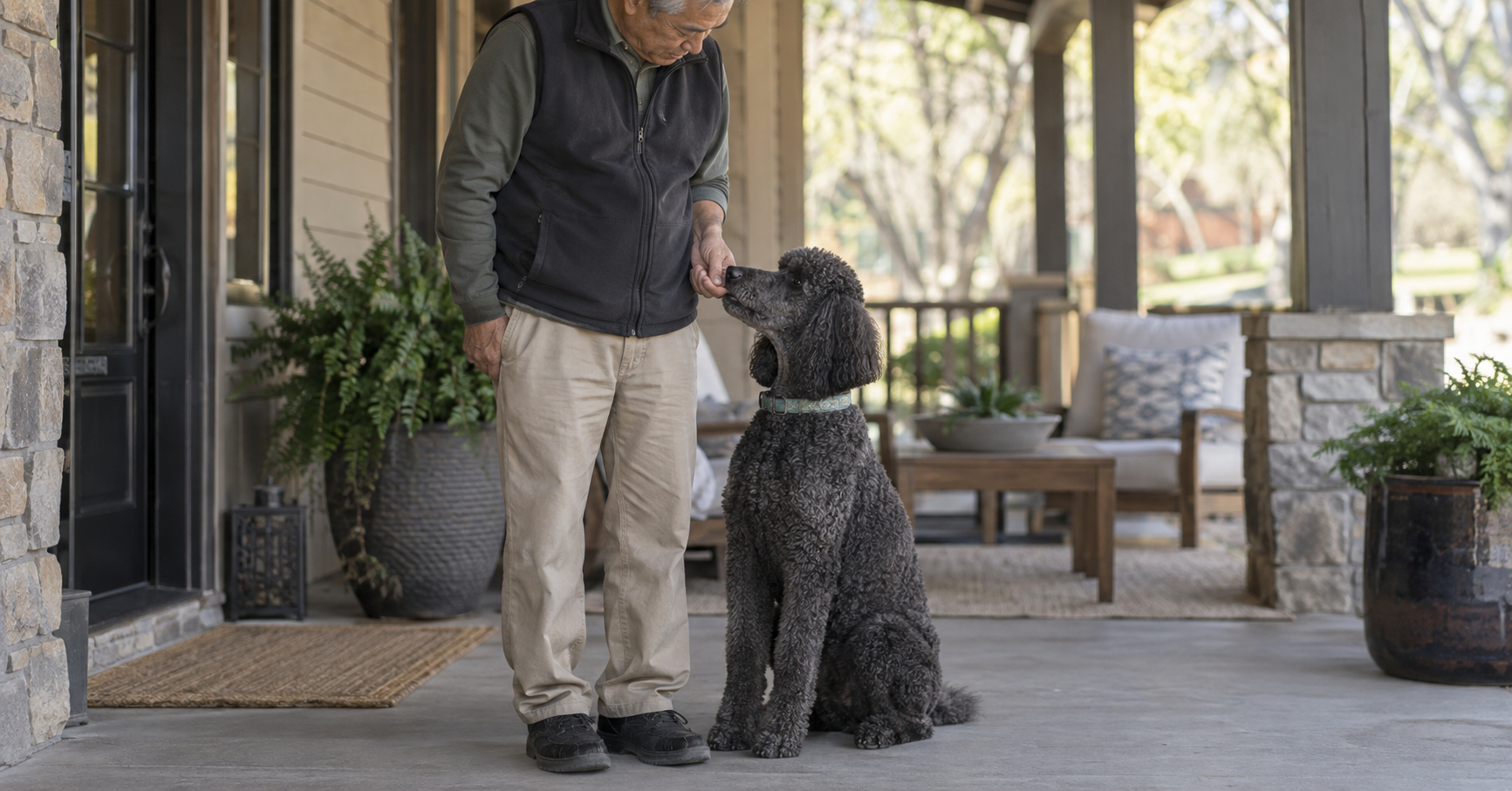
For a stationary sit, bring the food to a comfortable nose height so your dog doesn’t need to jump or twist. For a down, deliver low enough to reach while staying down. For walking beside you, deliver close to the side where you want the dog, while keeping your own balance and the leash slack.
For a deliberate reset, use your established release cue and place or toss the reward into a safe area. Don’t make the dog guess whether a flying treat has ended a stay. Our guide to a clear release cue helps separate those jobs.
Run a delivery check with one easy skill
Choose a quiet place and a behavior your dog already understands. Have several small rewards ready, keep your hands neutral, and cue once. Mark the correct response, then watch your own hand from pocket to dog.
Ask three questions: did the dog move before you reached, did your hand cross the dog’s path, and could the dog reach the reward without leaving the intended position? A short video from the side can show details you miss while looking down.
Suppose your dog sits neatly at your left leg but turns across your knees as you reach with your right hand. You don’t have to call that a failed sit. Try passing the food to your left hand before the lesson, then deliver at the dog’s natural head position beside you. Change the delivery first and see whether the finish improves.
Keep delivery separate from the prompt
If your hand moves toward the pocket before the dog responds, that motion may become part of the cue. Keep rewards accessible, but reach after the correct response. Fading visible treats is about removing that advance information, not removing reinforcement.
Don’t stretch your arm over the dog to make them hold still while you search for food. Prepare the rewards, shorten the exercise, or change your position. If handling food is difficult for you, a trainer can help arrange delivery from a comfortable seated position or another accessible setup.
When you want the dog to move for the reward
A tossed reward can be useful when you want the dog to move away and return for another attempt. It can also add excitement. Use it intentionally, keep the area clear, and avoid throwing food toward roads, stairs, other animals, or places the dog cannot safely reach.
If you’re practicing loose-leash walking, a reward tossed across your path asks for a very different movement from food delivered beside your leg. Match the delivery to the current lesson. If you want to offer a sniff break, release the dog for that separately so it’s clear when walking beside you has ended.
Change one thing and check the result
Repeat the same easy cue with a better delivery route. If the dog still can’t maintain the position, the remaining issue may be duration, distraction, physical comfort, or an unclear cue. Reward placement is one part of the answer, not an explanation for every mistake.
Watch the next few repetitions. If your dog can now stay beside your leg or remain down while eating, keep using that delivery. If they still move, you have something specific to check instead of repeating the cue and hoping for a different result.