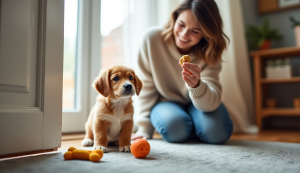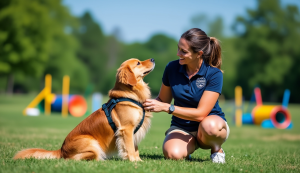

Puppy socialization is not a race to collect greetings. It is a series of safe, positive exposures that teach a puppy how to notice new people, places, sounds, surfaces, handling, and animals without being forced into more than they can handle.
The first months matter, but “more” is not automatically better. A puppy who is carried into a crowded place and overwhelmed has been exposed, yet may not have learned the confidence the owner intended. The quality of the experience matters as much as the checklist.
Start with observation, not interaction
Your puppy does not need to meet every person or dog. Sit at a comfortable distance from a quiet parking lot, watch a neighbor roll a trash can, walk across a different floor surface, hear a door close, or see a calm known dog without immediately approaching.
Let the puppy look, take food, move away, and return attention to you. That ability to observe and recover is more useful than a forced hello.
Use the puppy’s response to set the distance
Comfortable puppies may explore, accept food, respond to their name, and move with a loose body. A puppy who freezes, repeatedly tries to leave, refuses food they normally take, hides, or cannot disengage is telling you the setup is too much.
Create space. Lower the noise. Shorten the visit. You are not rewarding fear by helping a puppy feel safe; you are keeping the experience within a range where learning can happen.
Build a weekly exposure map
Choose one or two items from several groups rather than crowding everything into one outing:
- People: different ages, clothing, movement, and voices, with no requirement that they touch the puppy.
- Places: home, yard, a friend’s porch, a quiet storefront area, and controlled class environments.
- Sounds: appliances, traffic at a distance, knocks, rolling carts, and household equipment at manageable levels.
- Surfaces and objects: grass, concrete, mats, steps, umbrellas, boxes, and grooming tools.
- Handling: brief practice with paws, ears, collar, brushing, and being examined, paired with something the puppy values.
Record whether the puppy was comfortable, uncertain but able to recover, or overwhelmed. Repeat uncertain items more gently. Do not treat the list as completed just because the puppy saw something once.
Balance behavior needs with health protection
Socialization begins before every puppy has completed every vaccination. That makes veterinary guidance important. Ask your veterinarian about disease risk in your area, the puppy’s vaccination status, and safe options for classes and outings.
You can still create controlled experiences while avoiding unknown dogs, heavily used dog areas, and contaminated ground. A well-run puppy class should have health requirements, controlled play, skilled supervision, and a plan for puppies who need space rather than contact.
Do not let strangers turn practice into pressure
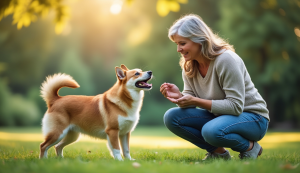
You are allowed to tell someone not to pet your puppy. If the puppy chooses to approach, keep the interaction brief and easy to leave. If the puppy hangs back, let observation count as the lesson.
I would rather see one short exposure that ends with the puppy still curious than five greetings that leave the puppy trying to escape. Confidence grows when the puppy learns that new things are manageable and the owner will listen.
Get help when recovery is not improving
Persistent fear, panic, snapping, prolonged hiding, or worsening reactions deserve professional guidance. Sudden behavior changes or signs of illness require veterinary input. Early help can keep owners from repeatedly practicing a setup that is too difficult.
NC K9’s guide to the best age to start puppy training explains why learning begins as soon as a puppy comes home. You can also review the site’s puppy training program when you want a structured plan for manners, communication, and safe real-life practice.
Socialization is successful when your puppy gains information without losing trust. Let the puppy’s ability to observe, respond, and recover decide what comes next.