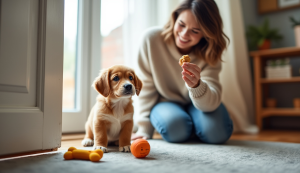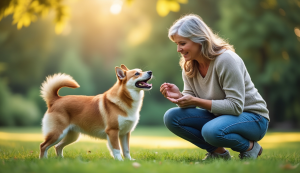

If you’ve got a patch of clear kitchen floor, you’ve got enough room to teach “find it.” Put a small treat where your dog can see it and say “find it” as they go to pick it up. After a few tries, watch what happens when they hear the words. If they look down expecting to find something, you can start giving their nose a little more of the work.
Move the same search to the edge of a towel
Lay a towel flat and let your dog watch you put a treat at the edge, with part of it showing. Keep the next hide in the same area, but tuck the treat just under the edge. Give the cue once and let them investigate. If they look up at you as though they’re waiting for directions, give them a moment. If they leave the area without finding it, show them the spot and leave part of the treat visible on the next round.
The treat they uncover is the reward. If you use a marker word to pick out movements in other lessons, you can leave it out here. You want your dog to stay with the scent when they catch it, and a word they associate with getting a treat from you may bring their attention back to your hands.
Use their search to choose the next hide
When the dog hears the cue, puts their nose down and keeps looking, try another spot near the towel. If you move to a new room, give them an easy hide again so they can get their bearings. Keep treats within reach on clear surfaces, count what you put down and pick up any leftovers. If food makes sharing space tense, give each dog a separate turn.
Two or three searches can be a good first game. If your dog starts sniffing as soon as they hear the cue, you already know how to begin next time. Use one familiar hide, then see whether they’re ready to look a little farther.