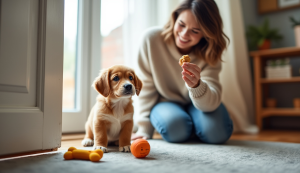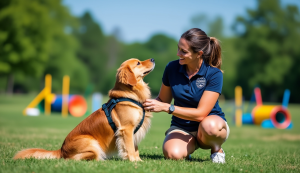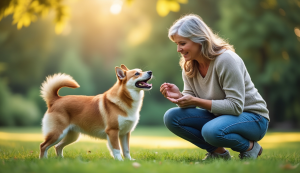
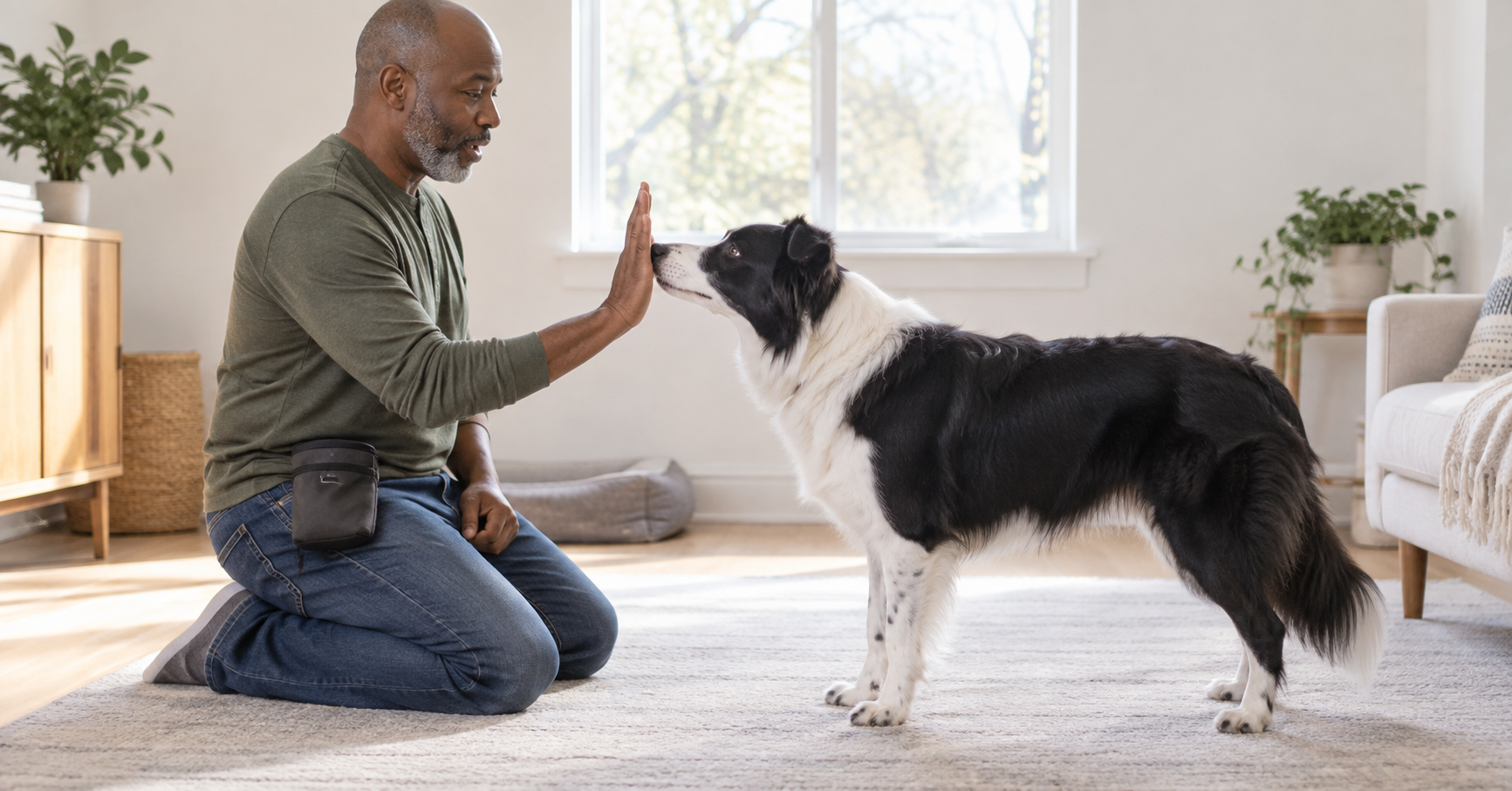
A marker word tells your dog the exact moment they did the part you intend to reward. It is not the reward, a command, or general praise. It is a brief promise: that action was correct, and reinforcement is coming.
That distinction solves a common timing problem. By the time you reach into a pocket and deliver food, your dog may have stood up, looked away, or moved toward you. A clean marker identifies the earlier moment you meant.
Choose one short, distinct signal
Words such as “yes” or “good” can work, but choose something your household can say consistently. If “good” is part of constant conversation with your dog, it may be less precise than a shorter training-specific sound.
Say the marker once in a neutral, clear tone. Do not stretch it into praise or repeat it while searching for a treat. You can praise before or after, but the marker itself should remain brief.
A clicker can serve the same purpose. The best choice is the signal you can deliver accurately and consistently in the situations where you train.
Teach what the marker predicts
Begin in a quiet room with several small rewards ready.
- Say the marker once.
- Pause briefly, then deliver one reward.
- Repeat several times without asking for a sit or another behavior.
- End the session while your timing is still clean.
The order matters: marker, then reward. Do not say the word while your hand is already inside the treat pouch, because the hand movement may become the more important signal.
Every marker should be followed by the promised reward during this teaching process. If the word sometimes predicts food, sometimes predicts nothing, and sometimes means “keep going,” it loses clarity.
Mark a moment you can see
Choose an easy behavior your dog already offers, such as looking at you, placing four paws on the floor, touching your palm, or stepping onto a mat.
Mark the instant the behavior occurs, then reach for the reward. If you are practicing a hand target, mark nose-to-palm contact rather than the dog walking toward your hand. The guide to teaching a hand target provides a clean behavior for practicing marker timing.
Ask another person to watch one short session or record from the side. Many handlers discover they mark after the dog has already left the position. The review is about human timing, not judging the dog.
Separate the marker from the cue
A cue tells the dog what behavior may earn reinforcement. The marker tells the dog which completed moment was correct.
For example:
- you say “down” before the behavior;
- the dog's elbows touch the floor;
- you mark that instant;
- you deliver the reward.
Do not use the marker to start the behavior. Do not repeat it to encourage completion. If the dog does not respond to the cue, make the setup easier rather than turning “yes, yes, yes” into background noise.
Decide what the marker ends
In early teaching, many dogs hear the marker and move toward the reward. That is useful only if you planned for it. If you are teaching duration, decide whether the marker releases the dog from position or whether you need a separate continuation signal and release cue.
Clarity at the end of a behavior matters as much as clarity at the start. Until your system is consistent, keep the exercise simple: mark the completed repetition, deliver the reward, reset, and begin again.
Fix the three common timing errors
Reaching before marking: Prepare rewards where you can access them, but keep your hands quiet until after the marker.
Marking the wrong movement: Identify the exact visible criterion before the repetition. “Calm” is too broad; “four paws remain on the floor while the door opens one inch” can be marked.
Forgetting the reward: Treat the marker as a promise. If you marked by accident, deliver the reward and improve your timing on the next repetition.
Marker training does not mean a dog must see food forever. It helps separate the correct action from the later delivery of reinforcement. Our article on dogs who respond only when food is visible explains how to move the reward out of the cue picture.
Measure clarity, not excitement
A useful marker produces a dog who can repeat the intended behavior, not merely a dog who becomes frantic at the sound. If your dog jumps, mouths, or cannot continue thinking after the marker, lower the value or size of the reward, slow the delivery, shorten the session, or choose an easier behavior.
The marker is a communication tool. Its value comes from what you mark, when you mark it, and whether you keep the promise that follows.