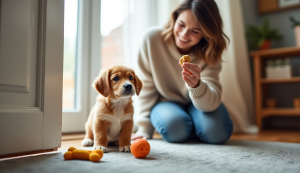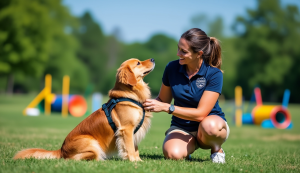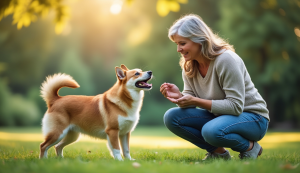
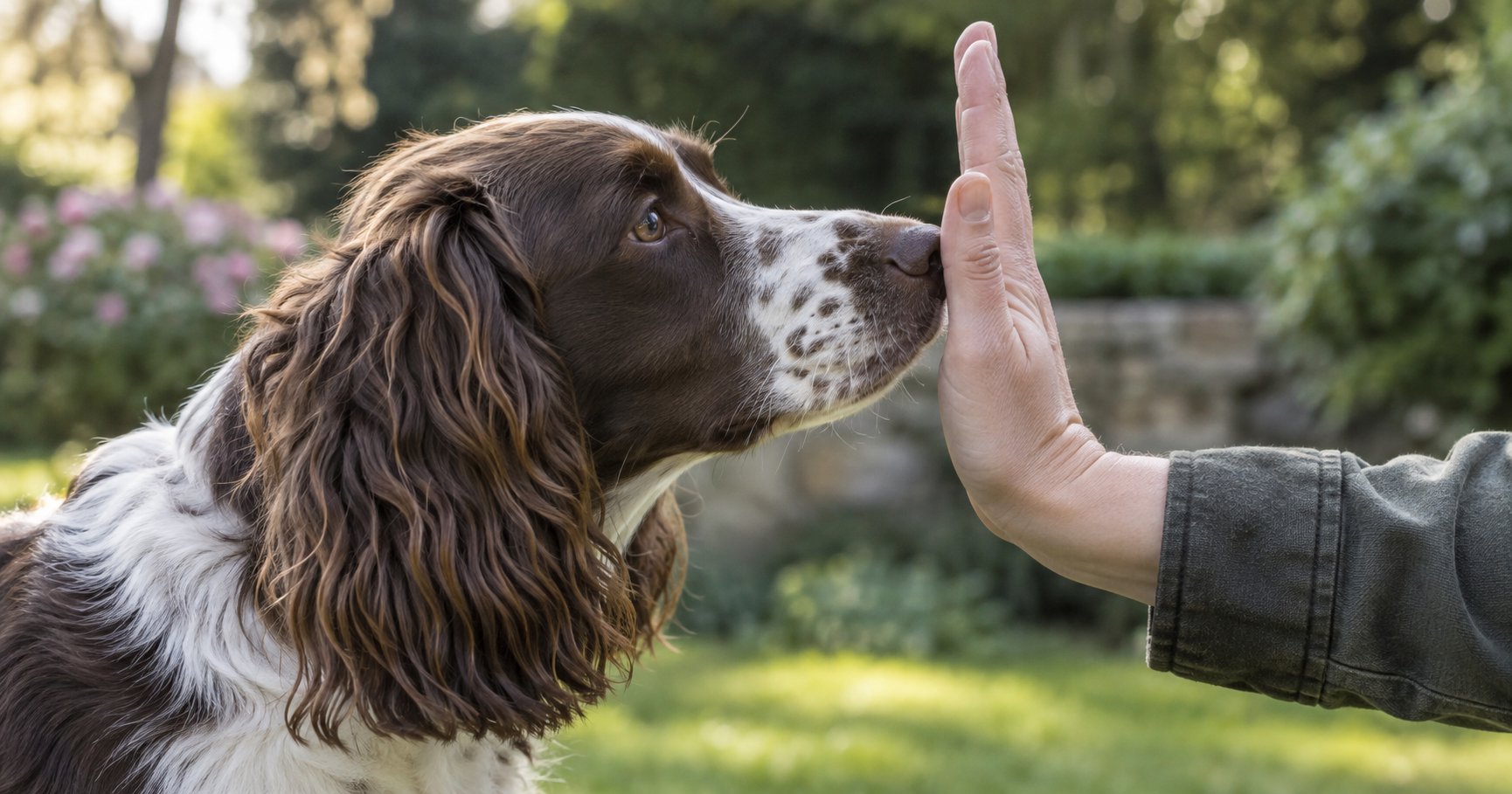
A hand target teaches your dog to touch an empty palm with the tip of their nose. Present your hand close enough for an easy voluntary nose bump, mark the contact, and reward. The dog should move to the hand; you shouldn’t move the hand onto the dog.
That distinction gives you a useful little skill. You can invite a willing dog to shift position without reaching for their collar or guiding them with food held in front of their face. Start with one clean touch before asking the dog to follow you anywhere.
Set up the first nose bump
Choose a quiet space with good footing. Have small, suitable treats ready in your other hand or a pouch. This exercise is for a dog who’s comfortable approaching you and your hands. If reaching toward the dog causes freezing, retreating, growling or snapping, stop and get individualized help.
Hold an open, still palm a few inches from your dog’s nose, at a comfortable height. Keep your fingers together and give the dog room to lean forward. The moment the nose touches your palm, say a short marker such as “yes,” then deliver a treat with the other hand near the place where the contact happened.
Remove the target hand briefly between attempts so presenting it becomes a clear invitation. You aren’t asking for a prolonged nose press or a paw shake. One light nose contact is enough.
The AKC’s nose-targeting guide describes this contact-and-reward foundation. Keep your first lesson that simple. Movement, distance and distractions can wait.
If the first attempt is messy
The dog doesn’t approach: lower your hand slightly or turn your body sideways so you’re not leaning over them. You can reward a small voluntary look or movement toward the palm, then gradually wait for closer approaches. If the dog looks worried, end the exercise. Don’t chase the nose with your hand to manufacture a successful touch.
The dog paws your hand: reset with the palm at nose height rather than above the head. Watch for the nose movement and mark that. A lower, closer target can make the intended movement clearer than a raised hand that resembles a familiar shake cue.
The dog licks or mouths: check that you’re presenting an empty hand without food residue. Mark the instant of nose contact before the dog starts investigating further, and feed with the other hand. If mouthing makes the exercise uncomfortable or unsafe, pause instead of trying to outmaneuver the mouth.
The dog touches, then stares at the reward hand: that’s a reminder to keep the target presentation and reward delivery separate. Our article on responding without a visible treat explains why the order of those signals matters.
Name it, then ask for one small move
Once your dog readily touches the presented palm, say “touch” just before you offer it. Reward the contact. Keep a few easy repetitions between changes, and stop while the dog still understands the game.
Next, place your hand far enough away that the dog needs one small step to reach it. Keep it still while they make the decision. Mark the contact and reward there. If the dog stretches awkwardly, sits and waits, or loses interest, bring the target closer again.
Notice what you’re building: a dog who understands where to go, not a hand that continuously steers a reluctant dog. If you’d like the dog to stand beside you, first offer a reachable target near that position. Don’t swing your hand behind the dog, twist their body into place, or keep moving the target just before they reach it.
Use the skill where it can stay trustworthy
A quiet repositioning beside the couch is a reasonable early use. Bringing a fearful dog closer to a stranger, pulling attention away from an intense trigger, or calling an unsecured dog out of danger asks much more than this foundation provides.
Keep a leash or physical boundary where safety requires it. Don’t use a successful touch as permission to grab the dog or begin handling they’ve been avoiding. The invitation loses its value if arriving at your hand repeatedly leads to an unpleasant surprise.
For today, aim to recognize a clean repetition: empty palm appears, dog chooses contact, marker sounds, reward follows. If that sequence stays muddled, NC K9’s private training program is a relevant place to work on your mechanics. The nose bump is small, but the clarity you practice with it carries into other lessons.