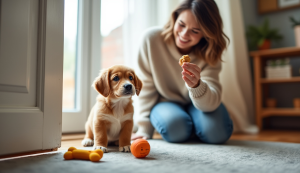

When your puppy bites during play, make hands and clothing unavailable as calmly as you can, pause the interaction, and give them an appropriate outlet before restarting. If biting returns immediately, the puppy may need the activity to end, a toilet break, or rest rather than a more exciting game.
Sharp teeth hurt even when the puppy is playing. You don’t have to dismiss that, and you don’t have to turn every nip into a confrontation. The useful question is what happened just before the mouth landed on you and whether the puppy can return to calmer play.
Arrange the pause before you need it
Play somewhere you can step behind a secure gate or otherwise separate safely without grabbing the puppy. Have a suitable toy long enough to keep your hand away from the mouth, and supervise its use. Choose size and material for your puppy; remove damaged toys and ask your veterinarian about appropriate chewing options.
Offer the toy before your puppy grabs skin or sleeves. Keep your movements measured. Fast hands, flapping clothing and running feet can make the person more interesting than the toy.
The AKC explains that mouthing is part of normal puppy exploration and play. Normal doesn’t mean it has to continue on your body. It means you can teach another way to interact without deciding that the puppy is being malicious.
When teeth meet skin or clothes
Reduce the movement that is keeping the game going. If you can do so safely, stop interacting and briefly step out of reach behind your prepared barrier. Don’t wave your hands, wrestle the puppy away, or turn the pause into a chase.
Resume only when you can offer calmer interaction. Start with the toy available and reward the puppy for engaging with it. If teeth immediately return to you, end that play bout and check basic needs instead of repeating the same restart.
A loud yelp helps some puppies interrupt themselves, but it can excite others. You don’t need to keep using a sound that makes your puppy more frantic. And don’t pin the puppy, hold the muzzle shut, or punish a growl. If you can’t disengage safely, get help with management rather than escalating the physical struggle.
Decide between a toy, a pause and rest
These aren’t three competing rules. They solve different parts of the interaction:
- A toy gives the puppy an appropriate place for their mouth while they can still play comfortably.
- A pause removes your participation when the game is landing on skin or clothes.
- Rest or another basic need becomes the priority when the puppy can’t settle back into manageable play.
Don’t assume every burst of biting proves the puppy needs more exercise. If it repeatedly happens after a long active period, more activity may miss the pattern. Offer a toilet opportunity and a quiet, familiar resting setup. A crate is appropriate only if the puppy is already comfortable there; don’t force a distressed puppy into confinement as punishment.
Our puppy potty and crate routine guide can help you fit rest and toilet opportunities together. There isn’t a universal sleep schedule or a birthday when all mouthing automatically stops.
Look at three ordinary episodes
For the next few naturally occurring incidents, jot down what came before: energetic play, moving feet, petting, handling, food or an object. Then note what you did and whether the puppy could disengage. Don’t create another incident to finish the notes.
Suppose the puppy plays with a toy comfortably, then starts grabbing sleeves after you speed up your movements. That gives you an earlier point to change next time. Biting when you touch a particular body area, on the other hand, deserves a different conversation and may warrant a veterinary examination.
Adults should manage all interactions with children. If you can’t supervise actively, separate them securely; don’t ask a child to practice being still while a puppy bites. The RSPCA’s child-and-dog guidance reinforces the need for adult supervision and safe space.
Repeated hard bites, injury, stiff or fearful behavior, guarding, or a sudden change shouldn’t be waved away as teething. Seek veterinary and qualified behavior help, and get appropriate medical care for a person who is injured.
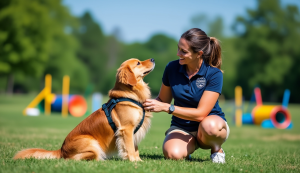
For ordinary puppy manners, NC K9’s puppy training program covers foundations owners can continue at home. Bring the pattern you’ve noticed. The next useful step isn’t proving you can tolerate the biting; it’s making the interaction easier to manage before it reaches your hands again.