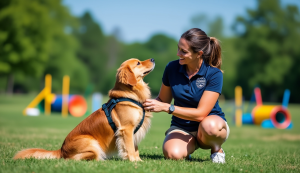

To teach a dog to settle on a mat, first make the mat a clear place to go, then build a relaxed position, duration, distance, and distractions one at a time. The mat should predict calm, successful work—not banishment after the dog is already overwhelmed.
A place cue and a true settle are related, but they are not identical. A dog can plant four paws on a bed while staring, whining, or waiting to explode off it. The useful household goal is a dog who understands the boundary and can become quieter there.
That is built in small pieces.
Choose a mat the dog can recognize
Use a bed, mat, towel, or low platform large enough for the dog to lie down comfortably. Start in a quiet room. Do not put the mat beside the front door and begin with visitors; that asks the newest skill to compete with the hardest event.
Place the mat down and reward the dog for investigating it. Deliver rewards on the mat so the location gains value. You can guide the dog onto it initially, but begin watching for voluntary movement toward the mat rather than moving the dog there by force.
Build four paws before duration
First reward one paw, then two, then all four on the mat. Once the dog is choosing the mat, reward a sit or down there. Add a release word and help the dog leave.
The release matters. Without it, the dog has no clear way to know when the exercise has ended. A clean release also lets you reset and see whether the dog chooses the mat again.
Reward the picture you actually want
If the goal is settling, reward lower energy as it appears: a hip rolled to one side, a head lowering, softer movement, or the dog remaining down without constant reminders. Deliver the reward calmly between the dog’s paws rather than pulling the dog forward off the mat.
Do not demand a long down before the dog understands the location. Several brief, clean returns to the mat can be more useful than one tense stay that ends in frustration.
Add only one kind of difficulty
There are three common ways to make place work harder:
- Duration: the dog remains longer;
- Distance: you move farther away; and
- Distraction: more happens around the dog.
Raise one while keeping the other two easy. If you walk across the room, wait longer, and open the front door in the same repetition, you will not know which part broke the behavior.
Return to reward the dog on the mat. Then release. Avoid calling the dog off the mat for every reward, or leaving the mat may become more valuable than staying there.
Use a five-stage household ladder
- Quiet room, you standing beside the mat.
- Quiet room, you moving a few steps.
- Normal household movement at a distance.
- A mild version of the real event, such as touching the doorknob.
- The real routine with management ready.
Do not skip from stage one to stage five because the dog looked good twice. The middle stages teach the dog that the same job applies while the picture changes.
Place is not a substitute for safety
A mat cue should not be the only barrier between a dog and a person when there is bite risk, escape behavior, or intense reactivity. Use a leash, gate, closed door, or other appropriate management. Train place separately from the highest-risk situation.
For visitor problems, NC K9’s article on calm doorbell and visitor routines shows how to split the entire arrival chain into practiceable pieces. If the dog’s behavior includes aggression, guarding, or an inability to recover, review behavior modification training rather than relying on a place command alone.
Measure recovery, not just staying
Keep track of how long it takes the dog to return to a softer body and normal breathing after a mild distraction. A dog who remains on the mat but stays highly aroused may need more distance, less intensity, or a shorter repetition.
The mat is not magic. Its value comes from hundreds of clear experiences in which the dog knows where to go, what earns reinforcement, and when the job ends. Build that history before you need it most.