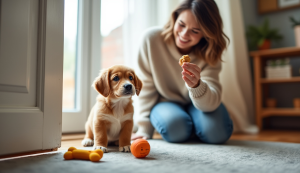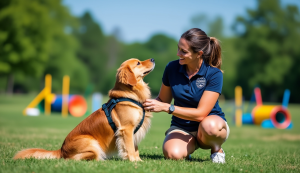
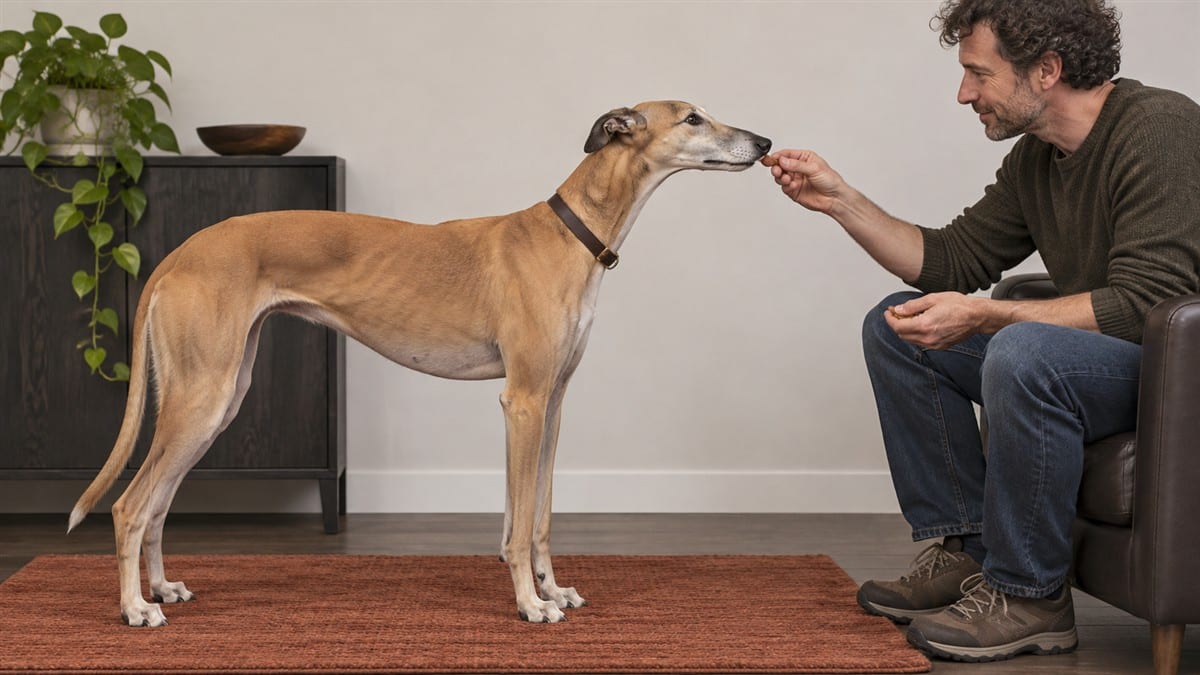
If your dog sits while you hold out a treat and then walks right past you when they finally get up, the movement you want is already in there. It happens as their rear lifts and they come onto all four feet. You can teach them to pause there once you’ve made that moment clear.
Let their movement tell you where to put your hand
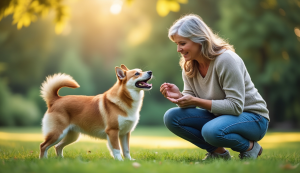
On a surface with good grip, hold a treat at nose height while your dog is sitting and move it slowly straight out. If the head goes up and the rear stays down, check whether your hand rose with their nose. If they get up and follow you for several steps, keep your hand closer and say a quiet “yes” the instant they stand, then give the treat. One small step is fine if that’s how they find their feet.
If your dog knows a hand target, try the same path with your open palm. Keep it near enough that they can reach it by getting up. If you started with a treat in your guiding hand, try the same motion with that hand empty and reward from your other hand when they stand. If they stay seated, go back to the treat for a few easy repetitions and try the empty hand again. Once the empty-hand signal is getting a stand reliably, say “stand” just before you give it.
Feed where you want them to stay
Give the reward at nose height where your dog stood up. If your hand goes up over their head, they may sit again to follow it. Once they can take the treat while standing, try waiting half a beat before you mark, then invite them to move after you’ve rewarded them. That brief pause is enough to begin with, especially if you eventually want to use the stand for something that involves reaching around them.
If they repeatedly struggle to rise, slip, sit back down abruptly or seem sore, stop and ask your vet about the movement. If they’re getting up comfortably, use the next session to see whether you can reward that same brief stand in place.