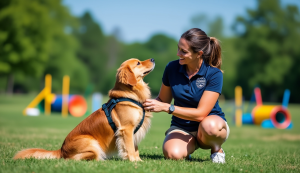
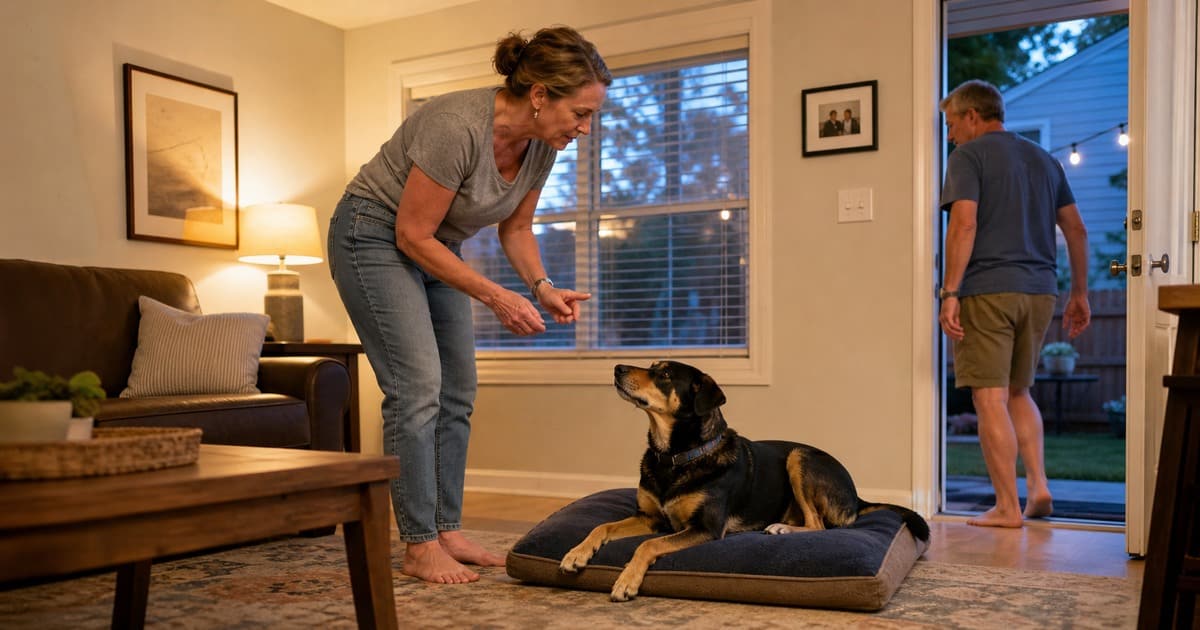
The first month after board and train is not a test of whether your dog “remembered everything.” It is the period when the training has to become part of life with you. The trainer can teach the dog, build repetition, and establish clearer responses. But your home has different people, different routines, and all the old situations that caused trouble in the first place. The handoff is where those two worlds meet.
That is why a dog can look sharp during a lesson and still need help settling back into ordinary life. It does not automatically mean the training failed. It means the dog is learning that the same expectations apply with a different handler in a familiar environment.
For an owner returning from training at a Four Oaks farm to Raleigh, Johnston County, or another nearby community, the location is only part of the change. The dog is also returning to the people and routines connected to the old behavior. Your job is to make the new communication understandable there.
Before You Leave, Make Sure You Can Handle the Dog
A useful handoff should leave you able to do more than watch the trainer demonstrate. You should understand the commands the dog knows, what each command means, how to give it clearly, how to respond when the dog hesitates, and what you are expected to practice at home.
If you are unclear, say so while the trainer can still watch you work. Many owners feel pressure to nod along because the dog is behaving well in that moment. But this is exactly when questions help. Ask what the trainer is seeing in your timing, leash handling, body position, or reward. You are not supposed to become the trainer in one session. You do need enough clarity to avoid giving the dog a different answer every time.
If you are still deciding whether residential training is the right format, our article comparing private training and board and train in North Carolina explains how the owner’s role changes between the two programs.
The First Week Should Feel Smaller Than You Expect
Owners are often excited to see what the dog can do, so they try everything at once. They invite people over, walk through the busiest part of the neighborhood, loosen household rules, and test the dog around the exact distraction that used to create problems.
That is a lot of change for the dog and a lot of new handling for the owner. A better first week is usually quieter and more deliberate. Rebuild the daily rhythm before asking for the hardest performance.
Start with the situations you can control:
- how the dog comes out of the crate or through a doorway;
- where the dog settles while the household is moving around;
- how walks begin and end;
- which family members give commands and how consistently they do it; and
- short practice in places where you can keep your own timing clear.
This is not about keeping the dog isolated or making home feel like a training facility. It is about giving both of you enough room to establish a working rhythm before life gets complicated again.
Do Not Bring Back Every Old Freedom on Day One
If the dog used to rush the door, drag you down the driveway, ignore calls from the yard, or take over the furniture whenever guests arrived, returning immediately to the old routine makes the new work harder to recognize.
Freedom should follow reliability. That does not mean the dog can never relax or make choices. It means you should be able to interrupt, redirect, and settle the dog before you make the situation harder. If you cannot yet do that in a quiet room, adding visitors or neighborhood dogs will not make the response clearer.
Think of the first week as a transfer of responsibility. The trainer built the beginning. Now the dog is learning that your cues matter too.
Use the Next Three Weeks to Add Real Life Back In
Once the basic routine feels more natural, start widening the picture. Add one kind of difficulty at a time instead of changing the place, distance, duration, and distraction all at once.
A simple progression might look like this:
- Week two: practice familiar skills in two or three ordinary places with manageable distractions.
- Week three: add longer duration or more movement while keeping enough distance from difficult triggers.
- Week four: work through a few normal household situations that used to create trouble, provided you can keep the setup safe and controlled.
The exact pace depends on the dog and the reason for training. A young dog learning household manners is not the same as a dog with a serious behavior or safety history. The point is not to hit a calendar milestone. The point is to notice whether you can keep the response clear as life becomes more realistic.
Know the Difference Between a Rough Moment and a Lost Plan
Dogs make mistakes. Owners mistime cues. A surprise dog appears around a corner. One difficult walk does not erase the training.
What matters is whether you know how to recover. Can you create distance, regain the dog’s attention, simplify the task, and finish with something both of you understand? Or are you repeatedly reaching the same point and no longer sure what the trainer expected you to do?
Get clarification when:
- different family members are getting very different responses;
- you cannot reproduce an important part of the handoff;
- a behavior is becoming harder to interrupt rather than easier;
- you are avoiding normal life because you do not trust your handling; or
- the dog’s behavior creates a safety concern.
You do not need to wait until everything falls apart. A small correction in your timing or setup can be much easier to make before a new habit becomes the household routine.
Board and Train Is a Head Start, Not an Owner Replacement
The most useful way to think about board and train is this: the trainer gets concentrated time to teach and practice, then the owner learns how to carry that work into the places that matter. The dog still has to live with you, listen to you, and handle your version of daily life.
That is also why owners should ask about the return-home process before enrolling. Our guide to Board and Train in Raleigh explains the broader program questions to consider, including owner handoff and realistic expectations.
If your dog is already home, keep the work simple enough to be clear, add difficulty gradually, and ask for help when you cannot explain why the response is changing. You are not trying to recreate the farm in your living room. You are teaching the dog that the same rules and communication still matter at home.