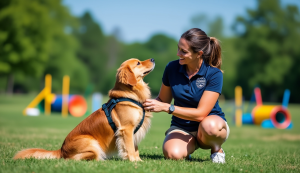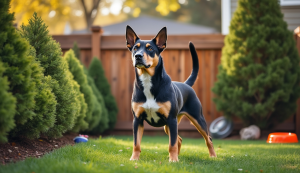

A reliable recall is built by proving, one level at a time, that coming back to you is worth doing even when something else is interesting. It is not built by taking the leash off and testing whether hope is enough. Until the behavior holds up around real distractions, use a fenced area or a long line so a training mistake does not become a safety emergency.
Many dogs appear to know “come” in the kitchen and forget it outside. Usually the dog has learned the cue in one easy setting, not across all the distances, environments, and distractions where the owner expects it to work.
Separate training from testing
Training gives the dog a version of the exercise they can complete, then rewards the return. Testing asks for the finished behavior under conditions the dog may not understand yet. If you call from across a busy park before practicing around comparable distractions, you are not finding out whether the dog is loyal. You are finding out whether the training has reached that level.
Keep the early repetitions easy enough that you can build a strong response. Start close. Use one clear cue. Encourage the dog as they turn toward you, and reward at your body so the full return matters. Then release the dog back to an appropriate activity sometimes, so “come” does not always mean that everything enjoyable is over.
Use a recall ladder
Create five levels from your dog’s real life. Your version may look like this:
- A quiet room with only a few feet between you.
- A fenced yard with ordinary smells but no active visitors.
- A fenced field or quiet training area with more distance.
- A long-line session with one mild, planned distraction far away.
- A long-line session where distance or distraction increases, but not both at once.
The exact locations matter less than the progression. Move up only when the dog is returning promptly and confidently at the current level. If the response slows down, reduce the difficulty. That is useful information, not failure.
Protect the cue
A recall cue becomes less meaningful when it is repeated while the dog continues doing something else. Say it once when you have a reasonable chance of success. If the dog cannot respond, use the long line and your movement to manage the situation rather than turning the word into background noise.
Also pay attention to what happens after the dog reaches you. Grabbing roughly, scolding for a slow return, or immediately ending every enjoyable activity can teach the dog that arriving is the worst part of the sequence. Reward the decision to come back, secure the dog calmly when needed, and keep the cue associated with safety and value.
Measure more than whether the dog arrived
“They came eventually” does not tell you enough. Track four details:
- What held the dog’s attention when you called?
- How far away was the dog?
- How quickly did the dog turn toward you?
- Did the dog return all the way, or stop several feet short?
The first turn is especially useful. A dog who notices the cue immediately but returns slowly has a different training problem from a dog who does not orient to you at all.
Off-leash freedom is not the only measure of success
Some owners feel pressured to prove their dog is trained by removing the leash. You don’t owe anyone that demonstration. A long line can give the dog room to explore while preserving control, and a fenced area can provide off-leash movement without gambling on an unfinished recall.
Follow leash rules wherever you train. Even a strong recall cannot control the choices of another dog, a driver, wildlife, or a person who does not want to be approached.
When you need a trainer’s eyes on the problem
Professional help is useful when the dog repeatedly breaks away, chases animals or vehicles, cannot disengage from other dogs, or responds very differently for different family members. A trainer can also help you see whether the problem is the cue, the reward, the handling, or a leap in difficulty.
If your dog listens in familiar places but loses every skill outside, bring that context to the evaluation instead of treating the recall as an isolated word. The private dog training program explains the one-on-one option, and the North Carolina program guide can help you compare formats.