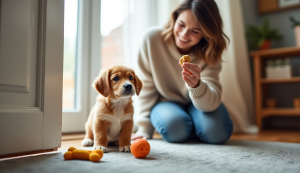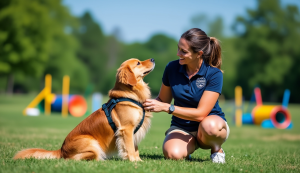

Puppy potty training gets easier when the crate, the outdoor break, and the rest of the day work as one routine. The crate is not the lesson by itself. It is a short-term management tool that helps you prevent unsupervised mistakes, notice when your puppy is likely to need a break, and reward the right choice outside.
If your days feel like a blur of accidents, trips outside, and guessing, stop looking for one perfect timetable. Start tracking the events that predict your puppy’s needs: waking up, eating, drinking, active play, and coming out of the crate. Those transitions are more useful than the clock alone.
Build the day around predictable transitions
A young puppy may not give you much warning. By the time you notice circling, sniffing, or wandering away, the opportunity can be almost gone. Taking your puppy out after those activities gives them a chance to go before an accident happens. Take your puppy to the same appropriate area after waking, after meals, after energetic play, and immediately after leaving the crate.
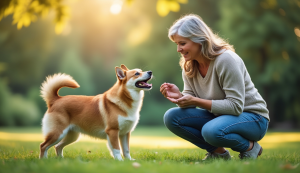
Go outside with the puppy instead of opening the door and hoping. A leash helps you stay close enough to see what happened. When the puppy finishes, reward promptly, then allow a little supervised freedom or play. That sequence teaches more than simply ending the trip the moment the puppy eliminates.
Give the crate one clear job
A properly introduced crate can provide a calm place to rest and prevent a puppy from rehearsing accidents while you can’t supervise. It should be large enough for the puppy to stand, turn around, and lie down comfortably. It should not be used to stretch the time between reasonable breaks or as punishment after an accident.
Think of the crate as one part of a three-option system:
- Direct supervision: the puppy is with you, and you can interrupt wandering or sniffing before an accident.
- Managed rest: the puppy is comfortable in the crate or another safe, appropriate confinement area for a reasonable period.
- Outdoor opportunity: the puppy is taken to the designated area before and after predictable transitions.
If none of those three options describes the moment, the puppy may have more freedom than their current habits can support.
Use a simple seven-day potty log
You do not need a complicated app. For one week, write down five things: when the puppy ate or drank, when they woke up, when they played hard, when they went outside, and whether they eliminated. Also record accidents without adding blame.
After a few days, patterns usually become easier to see. One puppy may need an extra trip soon after drinking. Another may have accidents during the burst of activity after dinner. The point is not to make your home run on a rigid minute-by-minute schedule. The point is to find the moments when your puppy needs more help succeeding.
What to do after an accident
An accident tells you that the routine, supervision, or timing needs adjustment. It doesn’t prove that the puppy is stubborn or spiteful. Clean the area thoroughly with a product intended for pet accidents, note what happened immediately beforehand, and give the puppy another appropriate opportunity outside.
Scolding after the fact cannot explain where the puppy should have gone. It can make elimination around you feel unsafe, which makes the real pattern harder to observe. Prevention and timely reinforcement give the puppy clearer information.
Know when the problem may be more than training
Progress will not be perfectly linear, but the overall pattern should begin making more sense as your routine becomes consistent. Contact your veterinarian if a previously house-trained dog suddenly starts having accidents, or if you notice straining, unusually frequent urination, diarrhea, excessive thirst, pain, or another abrupt physical change. Training cannot diagnose or treat a medical cause.
If the puppy is healthy but the routine still falls apart, bring your seven-day log to a trainer. It gives the conversation something concrete to work from instead of asking both of you to rely on memory.
Fit potty training into the rest of puppy life
Potty training is only one part of helping a puppy settle into a household. Rest, calm crate comfort, attention, handling, leash foundations, and short age-appropriate practice all support the same goal: teaching the puppy what everyday life with you looks like. NC K9’s guide to the best age to start puppy training explains how to increase difficulty based on readiness instead of chasing a rigid milestone.
You can also review NC K9’s puppy training tips for new owners for a broader foundation. If the crate itself triggers sustained distress rather than ordinary settling, do not treat that as a potty-training problem alone. The guide to puppy separation anxiety explains signs that deserve a different plan.