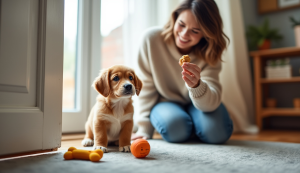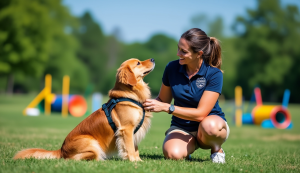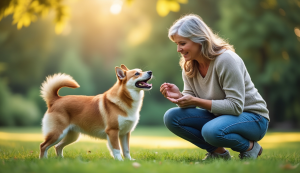
If your dog is far more interested in their toy than the treats in your pocket, it makes sense to want that game involved in training. And you can use play as a reward. The part I’d pay attention to is what happens afterward, because a game your dog loves can still make the next bit of teaching difficult.
When play pauses, can your dog come back to one easy cue, or are they now grabbing for the toy and unable to do much else? That return gives you something useful to judge. You’re looking for a game you both enjoy that also lets the lesson continue.
For that reason, I’d try play with something your dog already does easily, such as a hand touch in a quiet room. Food may still be clearer for a new movement because you can deliver it quickly without interrupting the teaching for a game. Our guide to rewards beyond food helps you compare the options. For this first trial, choose one easy action and a game you can end comfortably, so you can ask for that action again afterward.
Choose a game you can both finish comfortably
Use a familiar toy large enough for your dog to handle safely and a game that doesn’t put teeth near your hands. Work on level, nonslip ground with room to move. Keep other dogs and children out of the practice area. Don’t introduce high jumps, sharp turns or a new strenuous activity as the price of earning a reward.
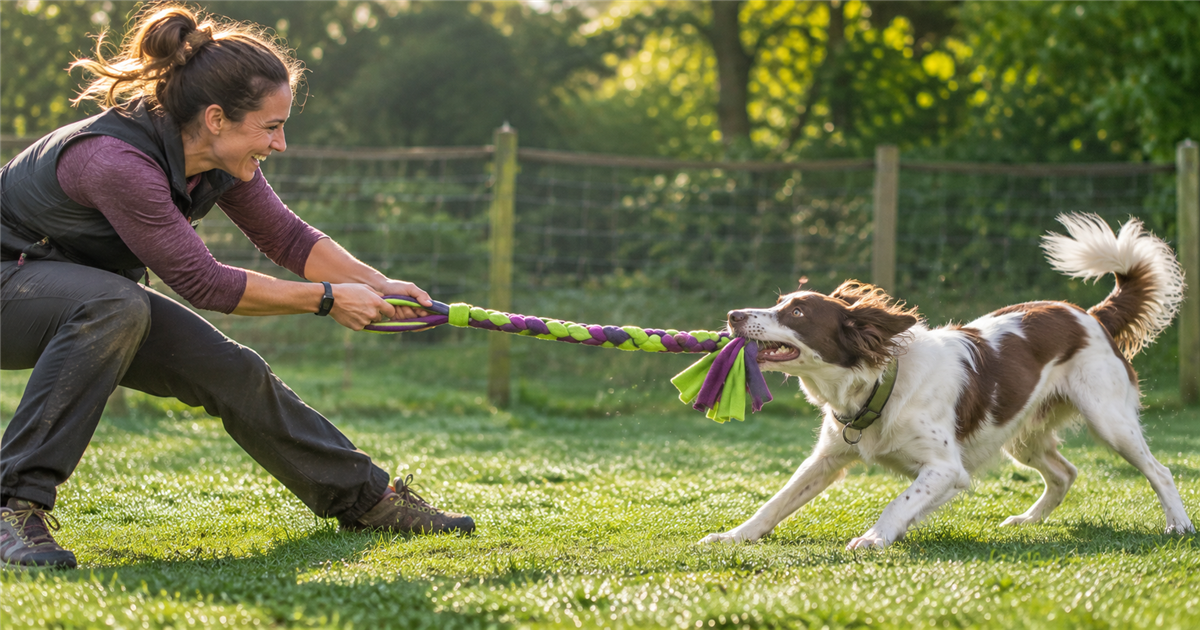
A brief tug game can suit a dog who already plays and releases comfortably. A short retrieve in a safe enclosed space may suit another dog. Neither is a requirement. If the dog guards toys, grabs hands, seems sore or can’t end the game safely, use another reward and get help before making play part of training.
Dogs Trust’s reward-based training guidance includes games and toys among possible rewards and emphasizes teaching a release. The toy has to be something your dog actually wants, while the way you play must remain safe for both of you.
Make the correct response start the game
Have the toy ready before you ask for the easy behavior. Keep it still and out of the way rather than waving it to get the dog moving. Give the familiar cue once. When the dog responds, mark that moment with a familiar “yes” if you use one, and immediately invite the game.
Play briefly, then use the release or trade your dog already knows. Don’t pry the mouth open, lift the dog by the toy or snatch it away. If release isn’t established, teach drop it separately with an appropriate reward-based plan before expecting it in an exciting training session. A full play-reward cycle needs a comfortable ending as well as an enthusiastic beginning.
Give your dog a moment to settle their feet and offer the same easy cue again. You’re looking for a willing response without frantic grabbing at the toy. That second response is useful evidence that the game is helping the lesson continue.
Adjust the game if you lose the next repetition
Suppose your dog touches your hand, enjoys tug, releases, then can only stare at the toy. They may value the game enormously, but the setup isn’t yet helping them listen again. Try a shorter, quieter game or a simpler next response. If excitement keeps climbing, finish after a comfortable release, put the toy away, and offer a quiet familiar activity. If you can’t get that comfortable release, stop asking for more training and seek help with the play routine. You can return to food for the teaching portion without abandoning play altogether.
If the dog responds only when the toy is already moving, its movement may have become part of the prompt. Practice the known cue with the toy still, close at hand, and start the game after the response. Reduce visible help gradually rather than hiding the toy and suddenly demanding the hardest version.
Play is also a poor match for some goals. An energetic chase may be enjoyable after a recall in a secure space, yet interrupt a lesson about staying quietly on a mat. Choose the reward for the behavior you’re building, and watch the dog’s next choice. For your first trial, one easy response, a short safe game and one willing response afterward is a useful sequence to aim for.