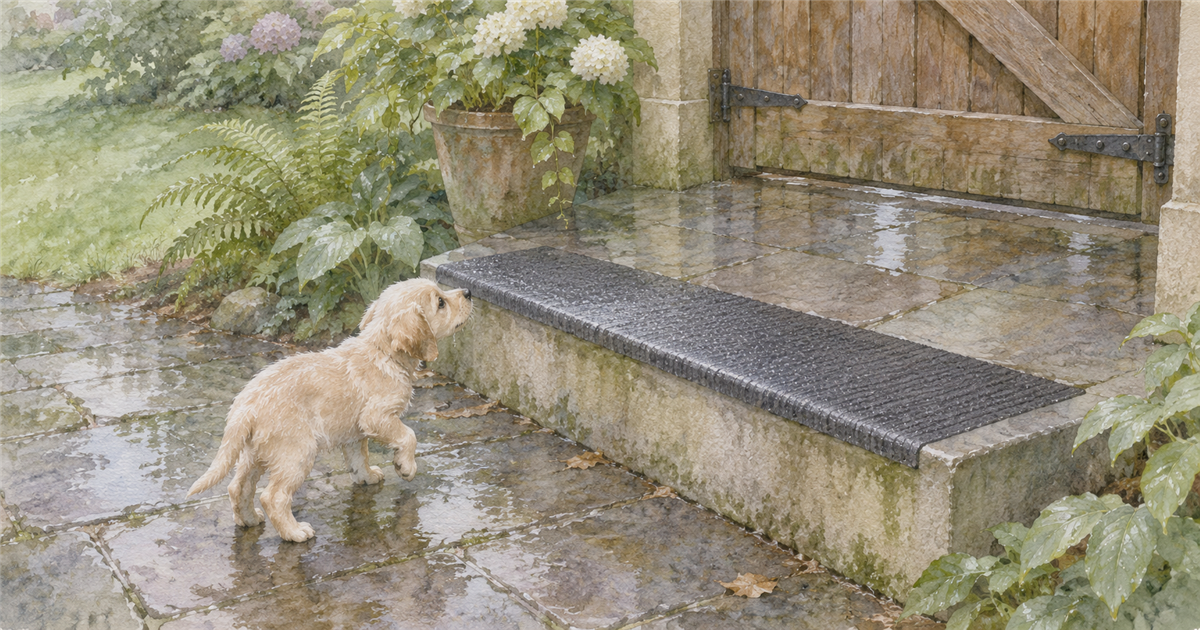
When your puppy stops at the bottom of the stairs, you may be thinking about the toilet trip that needs to happen, or the rest of the house you still need to reach. It’s tempting to coax them up with a treat and hope the next step gets easier. I’d sort out the daily route first, though, because getting a puppy up the stairs doesn’t tell you they can safely get back down.
Give yourself a way to make those necessary trips without asking your puppy to learn under pressure. Then you can look at whether the steps suit their body, whether their feet can grip and where any practice should begin.
Ask your veterinarian about stair use for your puppy’s size, development and health, especially if you aren’t sure what movement is appropriate. If a puppy who used steps comfortably suddenly refuses, limps, cries or moves differently, stop practice and seek veterinary advice. VCA lists reluctance to use stairs among possible signs of pain. You can’t decide from a refusal alone whether the problem is fear or physical discomfort.
Look at the stairs from floor level
Before adding food, inspect the route. Slippery treads, open gaps, an exposed side, poor lighting or a steep drop may make this a poor place to begin. Secure nonslip surfaces so they can’t shift under a paw. Keep access to unsafe flights blocked with an appropriate, securely fitted barrier.
Arrange the necessary trips separately from training. If carrying is appropriate, make sure you can lift and hold your puppy safely and keep your own footing; ask your vet for handling advice if needed. If you can’t, get help choosing a different daily arrangement. Don’t turn an urgent toilet trip into the moment when the puppy has to conquer a staircase.
This is an example of using management while you teach. It gives you time to practice without relying on a partly learned skill to prevent a fall.
Choose a first step with an easy way back
Once you’ve established that practice is appropriate, begin with a single low, stable step with secure sides and a nonslip surface. There should be safe level space at the bottom and a safe place to stand at the top. Decide how you’ll safely help the puppy back before inviting an ascent, so neither of you is left improvising at the edge. If your only option is a steep, open flight, get help arranging a better starting place.
Let your puppy investigate from the level floor. Reward a comfortable approach without placing food farther up than they can safely reach. They may first sniff the edge, then choose to place a paw on the step. Give them room to step away. That choice helps you see what they’re comfortable trying; restraint or a pull on the leash would obscure it.
If the puppy chooses to step up, be ready to reward within easy reach on the secure surface. Keep the attempt brief. Don’t lure them farther along to get one more step. A puppy stretched between a treat and uncertain footing isn’t ready to go higher.
Treat coming down as its own lesson
Before you repeat the ascent, make sure there is a safe way down. Looking over an edge and moving the front feet downward can be a different problem from climbing. Remain close enough to supervise safely without crowding, pushing or blocking the puppy’s movement. If they hesitate, don’t pull them over the edge with food.
End and use your planned safe assistance if the return isn’t comfortable. Ask for hands-on help rather than testing a full descent. Our guide to puppy socialization explains why encountering something new shouldn’t mean having to endure it; the same restraint matters here.
An appropriate first lesson may finish with the puppy approaching one low step comfortably. Increase the task only when both directions are suitable and easy, with veterinary advice guiding physical limits. Confidence should grow alongside safe movement, and the household barrier should stay in place whenever you can’t supervise.