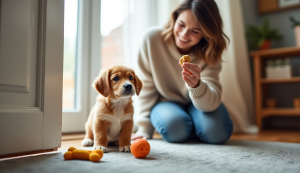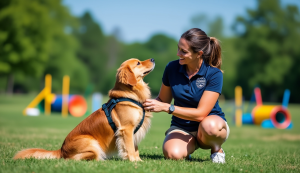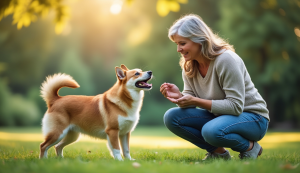
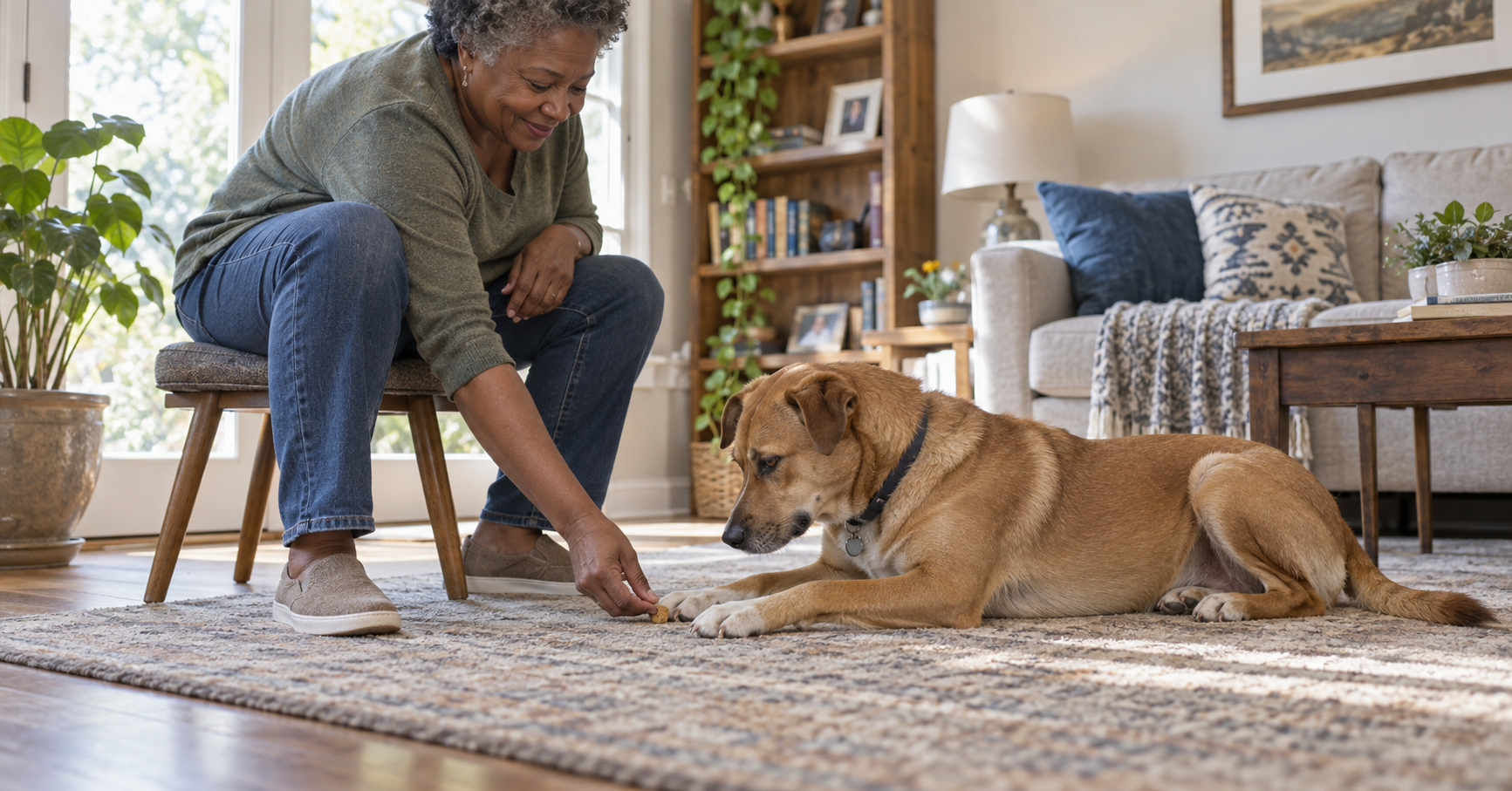
To teach your dog to lie down, start on a comfortable, nonslip surface and reward the dog for voluntarily bringing their chest and elbows to the floor. Teach the movement first, then add the word once your dog knows what to do. Staying down longer comes later.
If your dog follows your hand, noses the treat, and then backs away, don’t assume they’re being stubborn. I’d check where your hand is going, whether the floor is slippery, and whether the dog is comfortable lying down before asking more firmly.
Check whether the position is comfortable
Notice where your dog chooses to lie down during the day. A dog who rests happily on a rug but avoids the kitchen tile has given you a useful starting point. Use the rug, leave enough space for their legs, and keep other animals out of the lesson.
Sudden reluctance to lie down, stiffness, limping, difficulty getting up, or a change in normal resting posture calls for veterinary advice. Don’t keep testing the cue to see whether you can overcome a physical problem.
Choose a way to find the movement
For a dog who comfortably follows food, begin from a sit. Bring a small treat down toward the space between the front paws, then move it a little forward along the floor. Watch the elbows, rather than how far the nose travels. As the elbows and chest reach the floor, say a brief “yes” and deliver the reward there. That word marks the action you want to reward; keep its timing on the down, rather than waiting until your dog gets up.
If the dog keeps standing or walking forward, stop making the hand travel farther. Try a smaller movement on the next repetition. You can reward a useful lowering of the head or bending of the elbows, then ask for slightly more once that part is easy. Keep the food close enough to follow without stretching or scrambling.
Another option is to capture a down the dog offers naturally. Have a reward ready, quietly mark the moment your dog lies down, and place the reward where they can eat without getting up. This suits a dog who becomes frustrated by following a lure. It doesn’t mean waiting until the dog is asleep and startling them awake.
Don’t push on the shoulders, pull the front legs, or hold the dog in place. We want the dog to understand an action they can choose again.
Reward while your dog is still lying down
A common problem is the immediate pop-up: the dog lies down, your hand rises, and the dog sits to reach the food. Before asking for a longer down, change the delivery. Bring the reward between the front paws or to another comfortable low point the dog can reach while lying down.
For example, if you mark a down and then reach across the room for the treat jar, the dog has plenty of time to stand. Set a few rewards within your reach before you begin. With the food ready, you can reward the down before your dog gets up to follow you.
Add the word and remove visible food
Once the movement is predictable, say “down” just before the familiar hand signal. Then let the signal get smaller as your dog understands. Use an empty hand and reward from the other hand or a pocket after the response. Our guide to separating a cue from visible treats explains that transition.
Test the word in the same easy room before adding distractions. If your dog looks puzzled, help with the familiar signal on the next repetition. Repeating “down” several times doesn’t explain which movement you meant.
Decide when the down ends
At first, reward the position and release the dog promptly. Later, deliver another reward while the dog remains down, then give a clear release cue. Add a little time before you add walking away or an exciting distraction.
For now, watch whether your dog can lie down on one cue and stay comfortable while you give the reward. Release them before asking for more. Once that’s easy, you can begin adding time while continuing to reward the same position.