
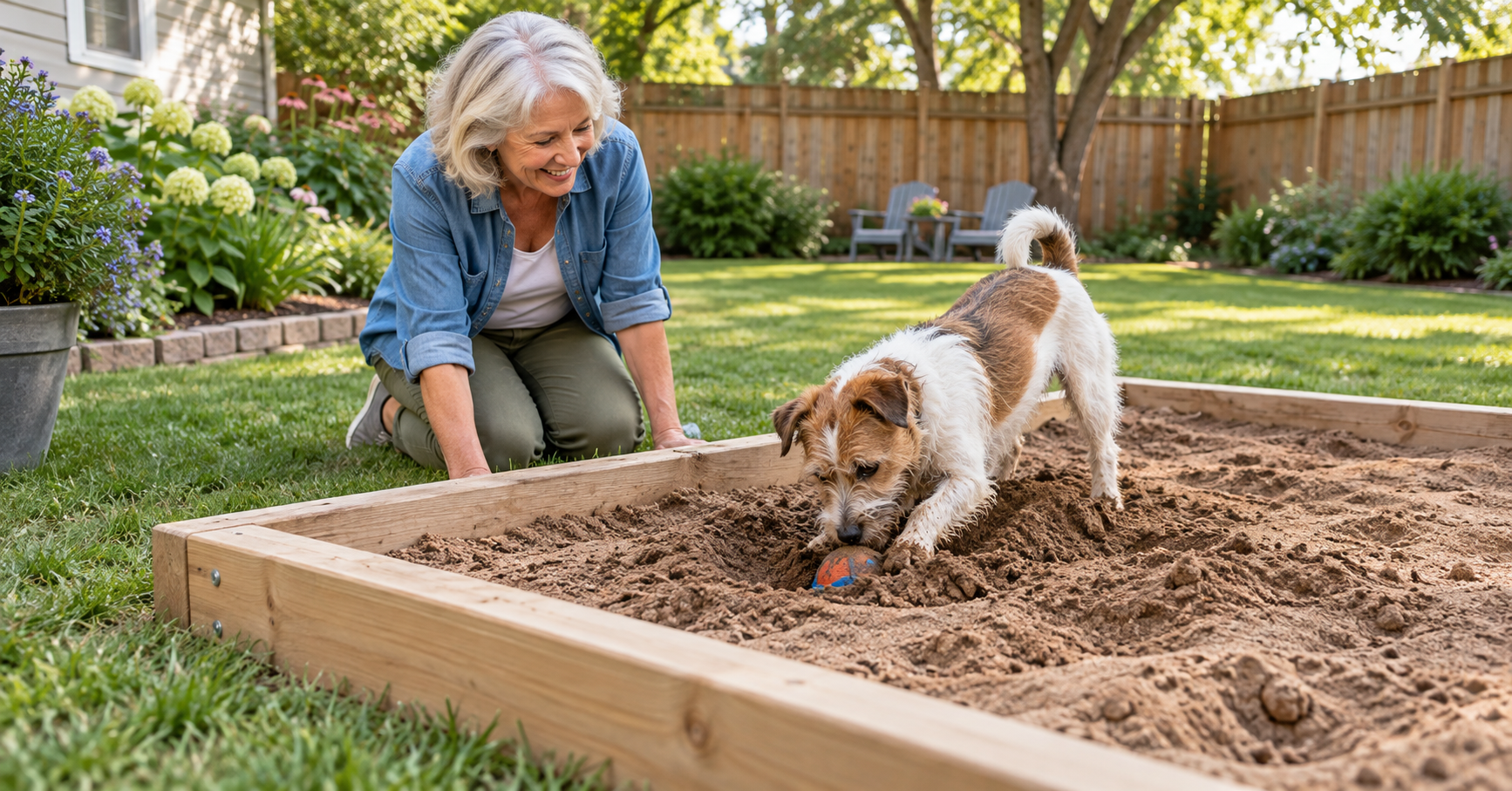
Digging is a normal dog behavior that can become a serious household problem. The useful plan is not simply “stop digging.” First protect the fence, garden, paws, and dog. Then identify what the location and timing suggest, meet the need you can identify, and teach where digging is allowed.
A hole along the fence, a cool depression under a shrub, and a series of holes that follow animal scent may look similar after the fact. They do not necessarily have the same cause.
Start with the map, not the label
For one week, record where digging begins, the time of day, weather, what happened before the dog went outside, and whether the dog was supervised.
Location gives you practical clues. Fence-line digging may be connected to escape or something on the other side. Shady-soil digging on a hot day may be an attempt to find a cooler resting spot. Repeated attention to one area may involve scent or small animals. Random holes during long unsupervised periods may point toward a need for more appropriate activity.
These are working hypotheses, not remote diagnoses. The map tells you what to manage while you learn more.
Secure the yard before training
If a dog is digging near a fence, do not leave them outside to rehearse an escape. Supervise directly, use a secure leash or contained area as appropriate, and inspect the fence. Training should not depend on catching the dog one second before they get out.
Provide shade, fresh water, and indoor access in hot weather. Check paws and nails if digging has caused injury. If the behavior is sudden, frantic, accompanied by other behavior change, or connected to distress when left alone, consult your veterinarian or a qualified behavior professional.
Management is not failure. It prevents the behavior from paying while you build a better option. Our article on management versus training explains why both jobs belong in the same plan.
Build a legal digging area
For a dog who enjoys digging as an activity, create a defined location with safe, loose material. A child's sandbox, raised garden-style box, or clearly bordered patch can work if it is appropriate for your property and the dog.
Make the first lesson easy:
- Let your dog see you place a valued toy or safe reward partly under the surface.
- Encourage investigation without moving their paws for them.
- Mark and reward interest in the legal area.
- Reset with the item only lightly covered.
- End while your dog still wants to return.
Over later sessions, cover the item more deeply and vary where it is placed. The legal location should produce success before you expect the dog to ignore every other patch of soil.
Interrupt early and redirect once
When supervised, respond at the first paw scrape or intense investigation in an off-limits area. Calmly call the dog away, move with them to the legal area, and help start an easy search there.
Do not stand across the yard repeating “no” while the dog continues digging. Do not punish the dog after discovering an old hole; the timing does not explain which earlier action you disliked. Filling holes with frightening or harmful surprises also creates risk without teaching the desired location.
If the dog immediately returns to the protected area, the setup is too difficult. End yard access or use a barrier. One successful redirection is more useful than five repeated failures.
Meet the need outside the hole
A digging area is not a complete answer for every dog. Add appropriate walks, sniffing, food-search activities, play, and short training sessions based on the dog's health and preferences. Address rodents or other yard attractants through safe property-management methods.
The aim is not to keep the dog constantly busy. It is to provide a daily routine with enough appropriate outlets that the flower bed is not the only interesting job available.
Measure where the behavior goes
Success can be counted. Track how many new holes appear outside the legal area, whether the dog can follow one early redirection, and whether they choose the digging box without help.
If the dog is trying to escape, digging only when alone, or showing panic or destructive behavior elsewhere, stop treating the issue as a landscaping habit. That pattern needs an individualized assessment.