A puppy who becomes wilder as the evening continues may not need another round of exercise. Mouthing, grabbing clothes, frantic running, and losing interest in familiar cues can appear when a puppy has been awake, stimulated, or socially engaged longer than they can manage.
The practical response is not to diagnose every burst of energy as “overtired.” Build a repeatable rhythm: activity, bathroom opportunity, brief transition, and protected rest. Then watch whether the difficult period becomes shorter and easier to predict.
Look at the hour before the behavior
Before adding more play, write down what happened during the previous hour. Did the puppy greet visitors, play with children, take a walk, train, eat, explore a new room, or miss an ordinary nap?
Also record when the puppy last relieved themselves. Rest will not go well if the puppy needs to go outside, and a late accident can be mistaken for a crate or settling problem.
The pattern matters more than one energetic episode. If the same behaviors appear after a long stretch of activity, your plan should include an earlier transition to rest rather than waiting for the puppy to fall apart.
Build a short wind-down sequence
Choose a sequence the household can repeat without turning bedtime into a production.
- Take the puppy out for a calm bathroom opportunity.
- Return inside without restarting vigorous play.
- Offer a quiet, puppy-safe activity appropriate for your dog's chewing habits.
- Lower household activity around the rest area.
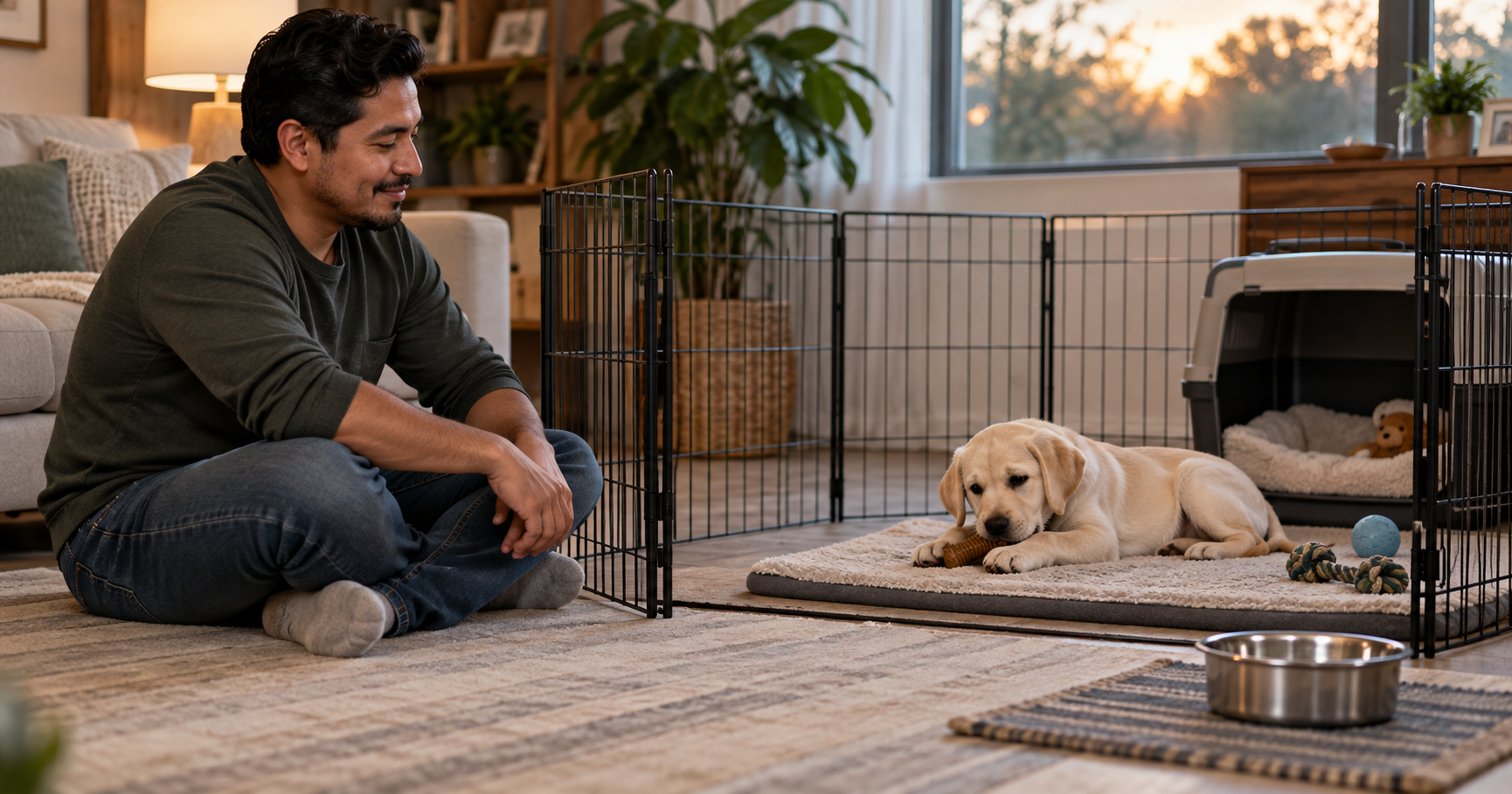
- Guide the puppy to the established crate, pen, or quiet sleeping space.
The transition should feel predictable, not punitive. If the rest area appears only after biting, yelling, or family frustration, it can become part of the conflict. Use it for ordinary naps as well as difficult evenings.
Our guide to coordinating puppy potty training and crate routines can help you place bathroom trips and rest inside the same daily system.
More Exercise May Not Help a Tired Puppy
More activity is not always the answer. A tired puppy may become more frantic, not less. Sustained or high-impact exercise may also be inappropriate for a growing dog.
Use several short periods of play, exploration, and simple training instead of one long campaign to “wear the puppy out.” After activity, create conditions where sleep is possible: a comfortable temperature, low traffic, limited interruption, and an age-appropriate safe space.
Family members need the same rule. If one person settles the puppy while another repeatedly wakes them for play, the puppy keeps getting conflicting signals about whether it is time to rest.
Separate biting management from the rest lesson
If teeth are already on skin or clothing, calmly interrupt access and create enough space to protect hands and ankles. Offer an appropriate toy if the puppy can still switch activities. If the puppy cannot disengage, end the interaction and move into the familiar bathroom-and-rest sequence.
Avoid wrestling, muzzle grabbing, or holding the puppy down. Those responses can add more arousal and do not teach what to do with the mouth.
The article on puppy biting during play helps distinguish a toy redirect, a brief pause, and a need for rest in the moment.
Use a three-day routine record
For three days, record four simple points:
- when the puppy woke;
- the main activity that followed;
- the first sign that behavior was deteriorating;
- when and where the next rest period occurred.
You are looking for a repeatable transition, not a perfect number of sleeping hours. Puppies differ by age, health, environment, and individual needs. A record lets you move the rest opportunity earlier without inventing a rigid universal schedule.
Know when the issue needs more than a schedule
Contact your veterinarian if your puppy cannot settle, seems painful, has a sudden change in sleep or activity, shows vomiting or diarrhea, struggles to breathe normally, or behaves differently in other concerning ways. A puppy who panics when confined, injures themselves, or cannot be left safely needs an individualized plan rather than longer enforced confinement.
Rest is not a punishment for being difficult. It is part of the daily structure that helps a young dog process play, learning, and household life.