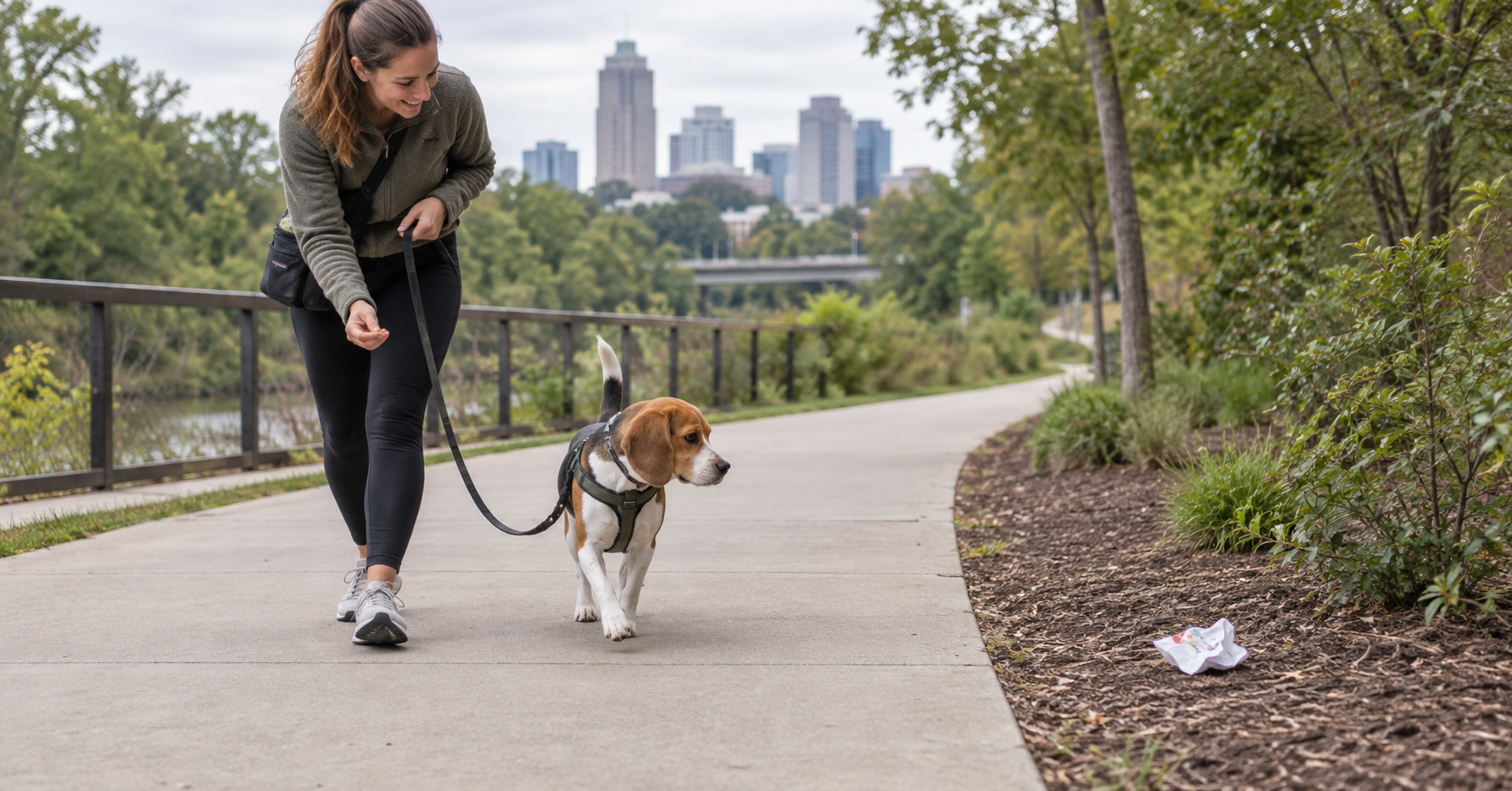
When a dog grabs food, wrappers, mulch, or other debris on walks, the immediate goal is safety. The training goal comes earlier: notice the item before your dog reaches it, create a path that keeps the leash loose, and reward the decision to leave it.
“Leave it” and “drop it” are both useful, but they solve different moments. Leave it prevents contact. Drop it asks for release after an item is already in the mouth. A safer walking plan needs both skills plus active route management.
Look Ahead for Litter
Your dog is closer to the ground and may smell food before you see it. On litter-heavy routes, look closely at the next few steps ahead. Scan the next section of sidewalk, curb, or trail rather than waiting for your dog to dive toward an item.
Change course early. Cross the street, make a small arc, or use a parked car as a visual boundary when it is safe. The goal is not to jerk the leash at the last second. It is to keep enough distance that your dog can still respond.
Use equipment that fits securely and gives you control without forcing the dog's face toward the ground. If your dog has swallowed dangerous items, discuss risk management with your veterinarian and a qualified trainer. A properly introduced basket muzzle may be part of some individual safety plans, but it should not be improvised from an article.
Build “leave it” with controlled objects
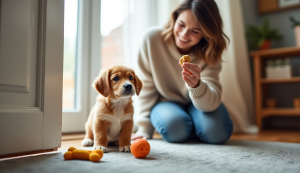
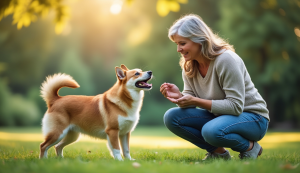
Start indoors with an item your dog is interested in but cannot access. Reward the moment your dog disengages and turns toward you. Deliver the reward from your other hand or another location; do not give the dog the item they were asked to leave.
Progress from a closed hand to a covered item on the floor, then to a visible item you can prevent the dog from reaching. Only after the dog succeeds in controlled setups should you practice around ordinary outdoor objects at generous distance.
The full distinction and foundation exercises are in Leave It vs. Drop It.
Add a walking pattern
Place a safe, boring practice object well off your path. Begin far enough away that your dog notices it without pulling.
- Say “leave it” once.
- Mark the first head turn or step away from the object.
- Move forward on an arc that keeps distance.
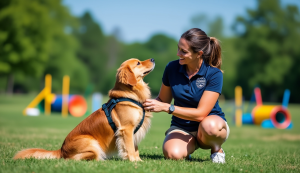
- Deliver the reward while your dog is moving with you.
- Continue the walk rather than circling back to test the same item repeatedly.
If the leash becomes tight, increase distance. Do not stand still and repeat the cue while the dog strains toward the object. That rehearses a contest instead of the movement you want.
Good loose-leash mechanics make the exercise clearer. Review how to work on leash pulling in Raleigh if the leash is already tight before your dog sees debris.
Have a plan for the item already in the mouth
Do not chase your dog, pry at the mouth, or turn the object into keep-away. Use the trained drop cue and make a fair trade. Move the dog away before retrieving the object so they cannot grab it again.
If the item could be toxic, sharp, obstructive, or otherwise dangerous, contact your veterinarian or an animal poison resource promptly. Training advice cannot determine whether a swallowed object is safe to monitor at home.
For dogs who guard found items, stiffen, growl, snap, or bite, do not practice taking objects by hand. Protect distance and seek an individualized behavior plan.
Keep a route-risk record
For several walks, note the type of item, location, time, your dog's distance when they first noticed it, and whether they could disengage. You may discover that one block, trash-collection day, or route near a restaurant creates most of the risk.
Changing the route is not avoiding training. It prevents uncontrolled repetitions while you teach with objects and distances you can manage.
Success is not a dog who never notices the ground. It is a handler who sees risk earlier and a dog who can turn away without a leash fight.