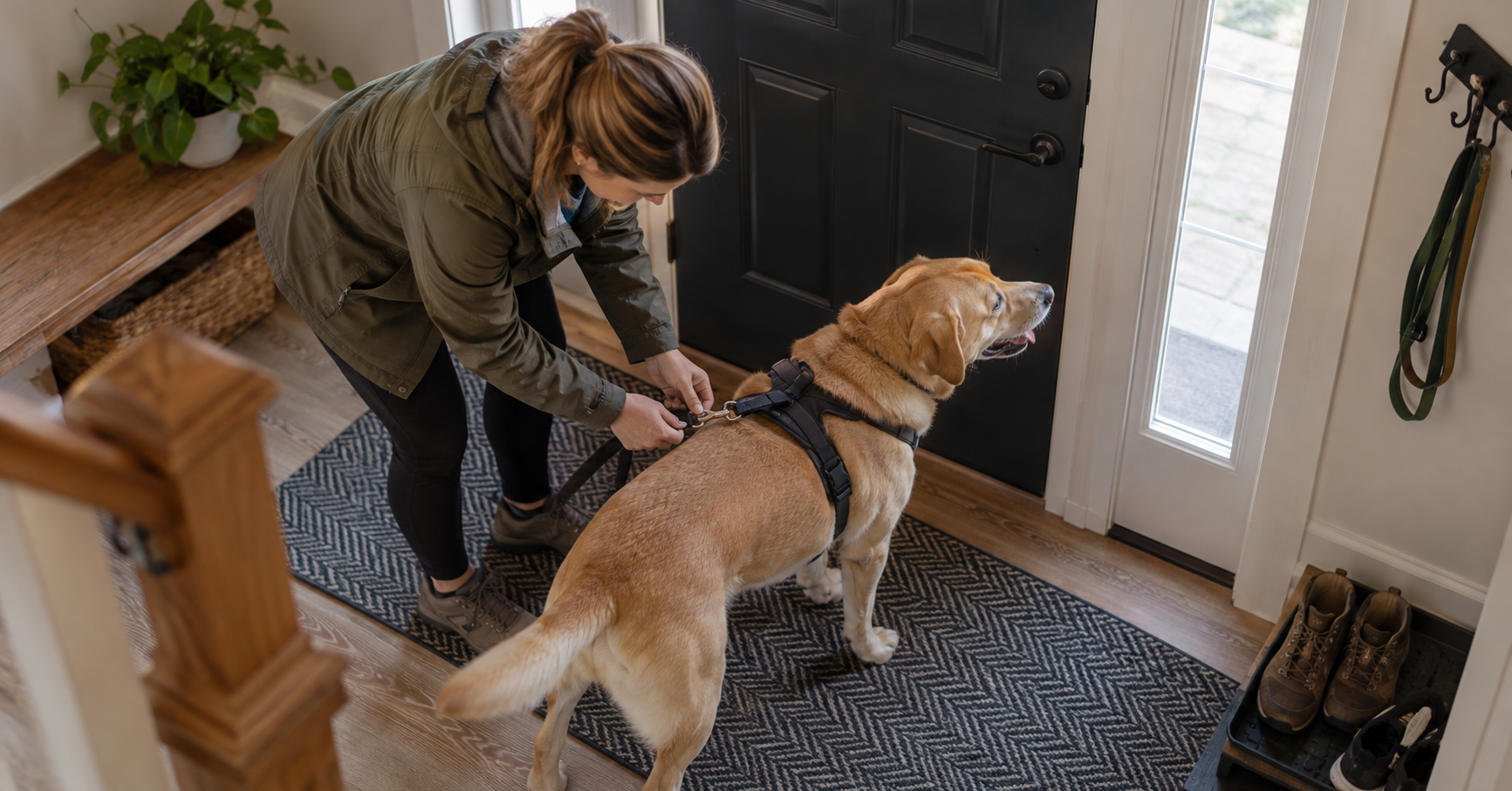
If your dog is already jumping and spinning before you leave for a walk, work on the first part of the departure routine that becomes difficult. That might be putting on shoes, picking up the leash, or attaching it. Rehearse that small step separately, and make essential bathroom trips easy rather than turning them into tests.
By the time the door opens, the dog may have spent several minutes getting more excited. If you ask for a perfect sit then, you’re asking after the excitement has already built. I’d start earlier, while your dog can still respond and you can handle them safely.
Find the first change in your dog’s behavior
Watch one ordinary departure without intentionally winding the dog up. Notice when their pace changes, their feet start leaving the floor, or their mouth reaches for the leash. Write down the step immediately before that change.
Also notice what makes the routine harder. A rushed morning, several people in the entryway, another dog waiting, or an overdue bathroom trip can change the lesson. A dog who can stand comfortably beside you at noon may not manage the same request first thing in the morning.
In a Raleigh neighborhood, the first few feet outside may also put the dog close to walkers, cars, or other dogs. Plan a safe route and secure equipment before opening the door. Calm behavior indoors doesn’t establish readiness for close encounters outside.
Practice the small step when you aren’t rushing out
If picking up the leash is the first difficult moment, begin with a much smaller motion toward it while the dog is relaxed. Reward four feet on the floor, then stop. Gradually work toward lifting the leash briefly and setting it down without an immediate rush to the door.
If your dog struggles when you try to clip the leash on, practice that handling separately with the door closed. Let the dog approach voluntarily, briefly touch the harness or collar, reward, and release. When that brief touch is comfortable, practice bringing the clip toward the attachment point, then clipping it on and taking it off, rewarding each manageable step. If your dog starts avoiding your hands, go back to the easier part. Don’t corner a dog who avoids equipment or hold a struggling dog still while completing the clip.
If your dog knows how to stand or sit on cue, either may help while you clip the leash on. Choose the one the dog can comfortably maintain; the practical aim is safe hands and steady feet, not a particular posture.
Have everything ready before you clip on the leash
Before a walk, prepare your shoes, bags, and rewards so your dog isn’t waiting through repeated starts and stops. Attach the leash in the easiest location. Use a simple familiar behavior, reward it, then give a clear release to move on.
For example, you may get one quiet second with four feet down after attachment. Use that second and proceed safely. Waiting for a long display of perfect stillness may take the dog past what you’ve taught.
Keep bathroom needs separate. If your dog urgently needs to go out, use the safest manageable exit and provide the opportunity. Practice later. Necessary care shouldn’t depend on passing a training test.
If waiting makes the dog more frustrated
A brief pause can help when the dog knows what will work next. Repeatedly stopping without a clear alternative may create more jumping, mouthing, or barking. Go back to a smaller rehearsal, reduce the wait, and reward the behavior you can actually observe.
If your dog can’t take food they normally value, don’t simply bring a more tempting treat and continue. Difficulty taking treats can tell you the setup is too hard or something else needs attention.
Stop if your dog panics around the equipment, turns to bite or mouth your hands, becomes unsafe to handle, or shows pain. Get veterinary or behavior help suited to what’s happening. Don’t yank the leash or push the dog down to finish the routine.
Then teach the first few steps outside
Once attachment and departure are easier, treat the initial walk as its own lesson. Use a quieter route and reward manageable movement beside you. Our loose-leash walking guide picks up there.
Write down the first step that was difficult and what your dog could comfortably do just before it. That’s where the next practice belongs. You don’t need to solve the entire walk before you can improve the way it starts.