In the first week with a newly adopted adult dog, teach how daily life works in your home: where bathroom trips begin, where food and rest happen, and which easy choices earn a reward. Keep the routine predictable and the environment manageable. Add formal lessons as the dog becomes comfortable enough to participate.
You may be eager to find out what your dog knows. That’s understandable, but a new room, unfamiliar people, and different sounds can change how a familiar skill looks. I wouldn’t use the first evening as an obedience assessment or assume a quiet dog is already comfortable.
Find out what your dog is used to
Ask the shelter, rescue, or previous caregiver what they know about feeding, bathroom habits, safe handling, equipment, other animals, and time alone. Treat that history as useful information, then observe the dog in your actual household. Don’t deliberately recreate a reported problem to see whether it’s true.
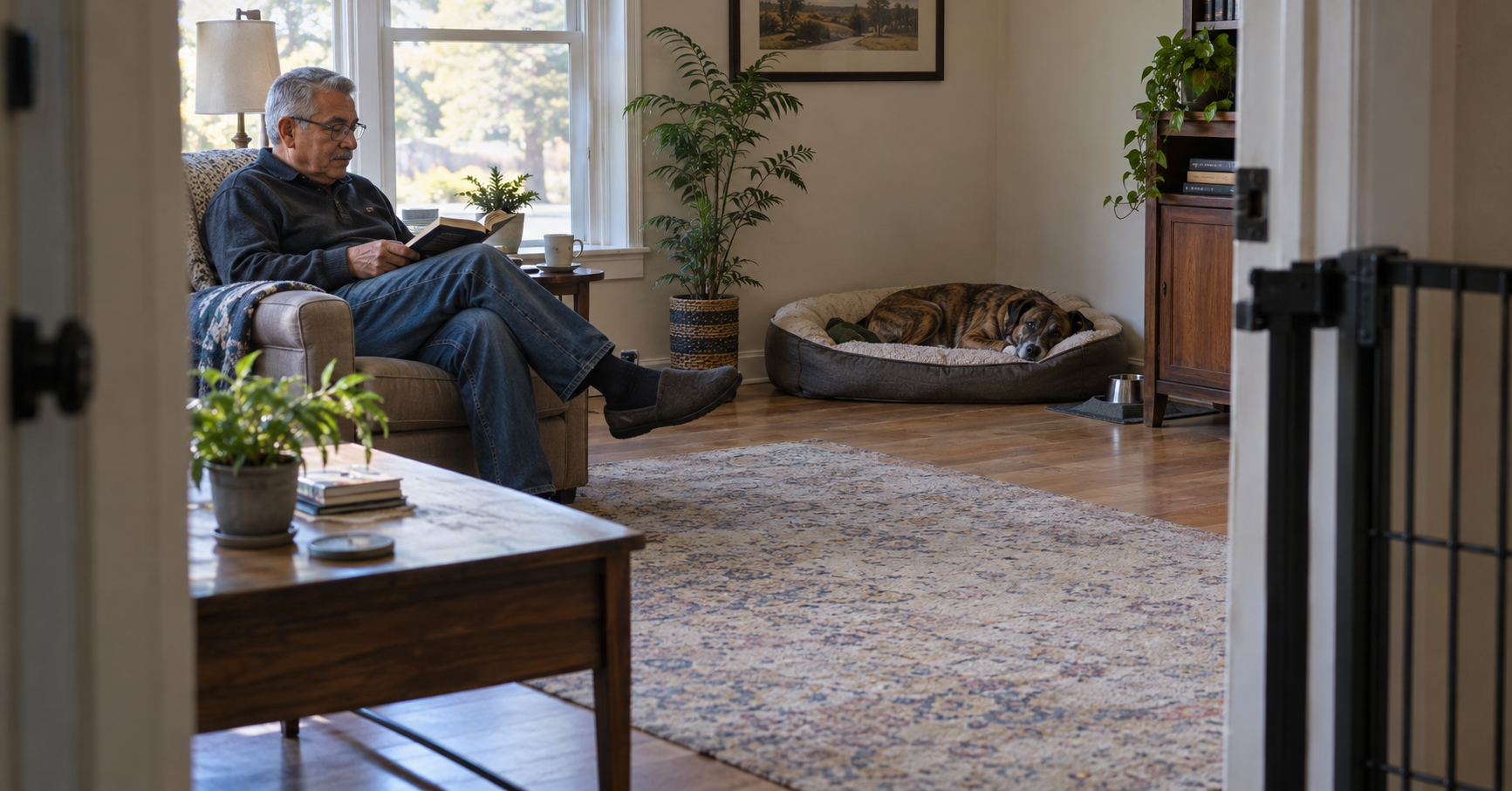
Choose a quiet resting area and limit unsupervised access to hazards. Check doors, fences, identification, and walking equipment. Keep other pets’ food and valued items separate, and plan introductions carefully rather than expecting everyone to share space immediately.
A gate can make the home easier to supervise, provided the dog is comfortable with the arrangement. Being contained in a crate doesn’t mean the dog feels comfortable there. Our explanation of management versus training helps you decide what each part of the setup is meant to do.
Teach the routes the dog will use every day
Take the dog to the intended bathroom area on secure equipment and reward appropriate toileting. Offer regular opportunities, especially around waking, eating, and activity, while you learn the dog’s pattern. An adult dog may need help recognizing how access works in a new home.
If accidents happen, note the time and preceding activity, clean up appropriately, and improve supervision and opportunities. Don’t punish the dog afterward. Our bathroom and confinement routine guide explains the relationship between access, observation, and rest; adapt it to the adult dog’s needs rather than assuming puppy timing.
Repeated accidents, straining, unusual thirst, diarrhea, or other health changes call for veterinary advice. Settling into a home doesn’t explain every symptom.
Pick one or two easy interactions
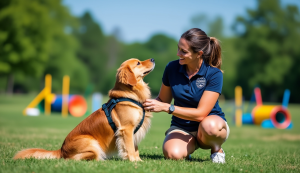
Reward the dog for voluntarily checking in with you or approaching a comfortable resting spot. A check-in can be as simple as your dog turning to look at you: quietly acknowledge it and offer a small reward without calling them over or asking for a sit. Keep the interaction brief enough that they can walk away. If they know a simple cue, try it once in an easy setting and reward success. If they don’t respond, don’t turn the moment into an argument.
For example, a dog who readily approaches you in the kitchen may hesitate in the hallway near a noisy appliance. Work where the dog can participate, and change the environment before increasing the request. That hesitation tells you the hallway may be harder for this dog. It doesn’t mean you need to insist until they do what they did in the kitchen.
Don’t use repeated cue drills to fill every quiet moment. Rest, exploration, and predictable care also help the dog learn the household.
Let your dog show you when to ask for more
Don’t expect your dog to be settled just because the first week is over. Look for ordinary changes: the dog can rest, eat normally, move through familiar areas, approach willingly, and recover after mild everyday activity. No single signal proves complete comfort, and different dogs progress differently.
If a lesson brings persistent avoidance, frantic activity, freezing, or distress, make the situation easier and stop the drill. Growling, snapping, guarding, escape attempts, or inability to cope with necessary handling warrants an individualized safety plan. Arrange veterinary input when health or pain may contribute.
Keep a small record you can use
Write down meals, bathroom trips, rest, comfortable interactions, and situations that were difficult. Include what happened just before and after the behavior. That gives you a better basis for next week’s plan than a label such as “stubborn” or “perfect.”
If you want professional help, our guide to preparing for a dog training evaluation explains what observations to bring. For now, keep the daily routine steady and notice where your dog still needs help. Those observations will help you choose what to teach next, whether you work on it yourself or with a trainer.