You can teach your dog a different word or signal for a behavior. First decide whether you’re renaming a skill the dog already performs comfortably or rebuilding a lesson associated with confusion or worry. A new word doesn’t automatically repair the old training situation.
Maybe “okay” releases your dog every time it comes up in family conversation, so you want “free” instead. Or maybe “come” has been repeated while the dog keeps running, and you want a fresh start. Those can both justify a new cue, but I wouldn’t teach them in quite the same way.
Check the behavior before changing the label
In a quiet, safe setting, ask once using the old cue. Keep the usual reward available and avoid extra body prompts unless they’re part of the skill you’re checking. Does the dog respond comfortably and predictably?
If yes, you may simply need a new label. If no, look at the conditions. A cue that works in the living room but fails near another dog may need easier practice around distractions. That isn’t proof the word itself is spoiled. The difference between listening at home and outside is often a change in difficulty.
Signs such as hesitation, avoidance, or tension around a particular cue deserve attention, especially if the cue has regularly preceded an unpleasant event. Don’t deliberately recreate that event to test your theory.
When a reliable skill needs a new word
Choose one word the household can keep consistent. Practice an easy version of the skill. Say the new cue, pause briefly, then give the familiar old cue or hand signal. Reward the correct response.
Your dog hears the new word, then the familiar cue that tells them what to do. If you say the old cue first, they can already be doing the behavior before they hear the new word.
As the dog begins responding after the new cue and before the old one, omit the old cue on an easy repetition. Reward that response. If the dog doesn’t act, use the new cue followed by the familiar one on the next repetition instead of repeating the new word faster.
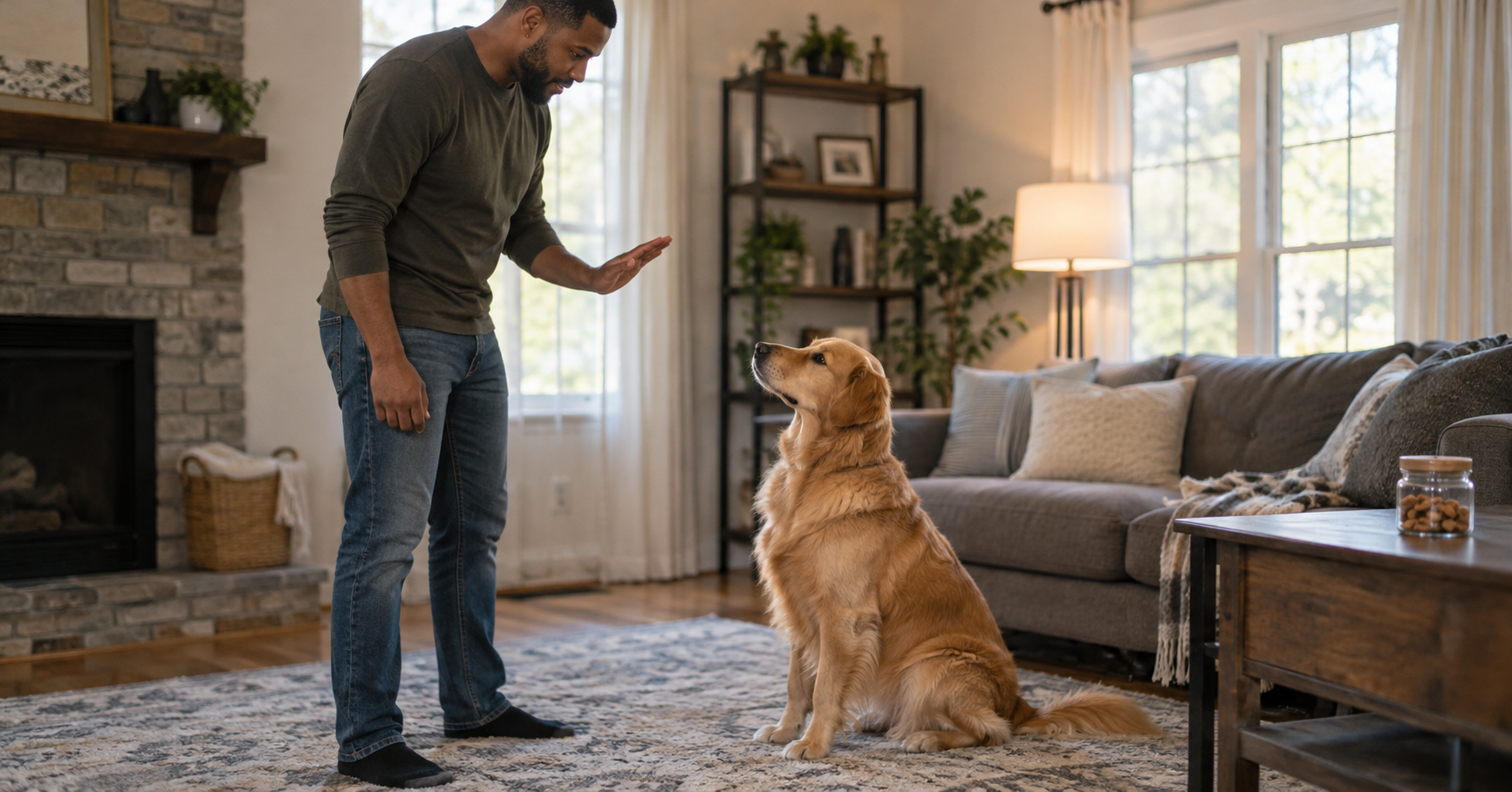
Take a familiar release as an example. Ask for a brief sit, say “free,” then use the old release if needed. Let the dog leave the position and reward. Later, test “free” by itself in that same quiet room. Don’t begin the change at an open front door or beside traffic.
When the lesson needs to be rebuilt
If the old cue produces uncertainty or avoidance, don’t repeatedly pair your new cue with the troubled one. Teach the behavior again under easier, comfortable conditions, and introduce the fresh cue when the action is predictable.
For a recall, that may mean short, rewarded approaches in a secure space, with the dog safely contained or on appropriately handled equipment. It doesn’t mean testing a new word off leash. Make arriving worth the dog’s effort, and don’t use the new recall for situations you haven’t prepared the dog to handle.
Our article on repeating commands can help you identify prompts and conditions that need changing along with the vocabulary. A trainer can help separate a missing skill, a difficult environment, and a worrying association without making unsafe tests.
Agree on the new cue at home
Tell everyone the exact new cue, the behavior it requests, and the easy setting in which you’re practicing. Avoid having one person try the new word at a distance while another keeps repeating the old one.
A shared family training plan is especially useful when changing a release, recall, or furniture cue. Write down what counts as success and what help to provide when the dog is unsure.
One response to the new cue is a start, but it doesn’t tell you how the dog will respond elsewhere. Get comfortable responses in that room, then practice in another easy room before adding distance or distractions. There’s no need to test whether the dog has forgotten the old word; you need to know that they understand the new one.