When your dog loses a familiar skill around distractions, lower the other demands. Keep the response short, stay close, and change one part of the challenge at a time.
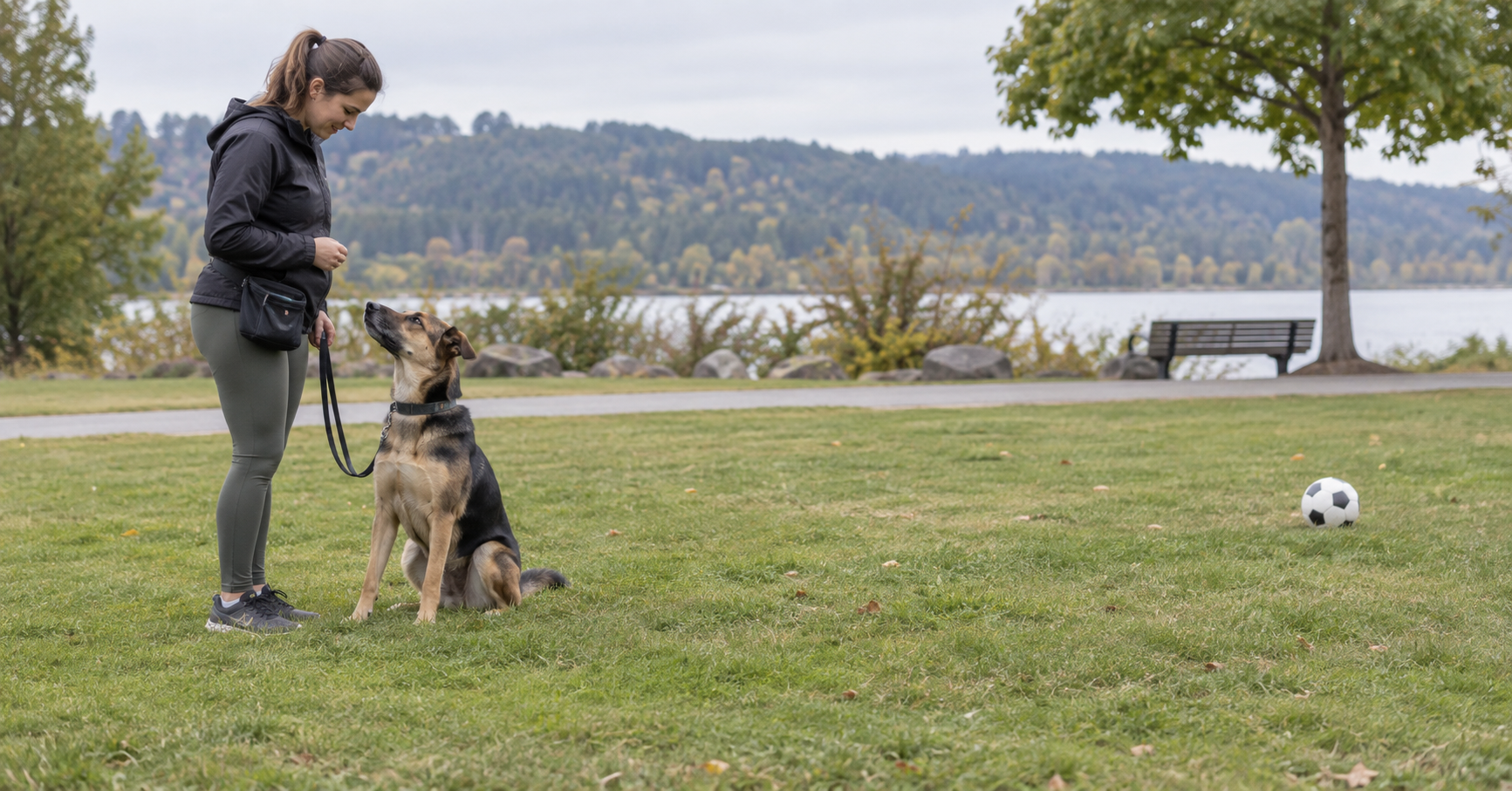
A sit in the kitchen and a sit beside a rolling soccer ball share a word, but they are not the same assignment for the dog. If you add distance, time, and an exciting environment together, failure does not prove the dog is stubborn. It tells you the practice jump was too large to explain clearly.
Give the distraction a level, not a label
“Other dogs” is too broad. One quiet dog seventy feet away may be workable; one running dog at ten feet may be impossible. “People” could mean a seated neighbor or a group of children playing. Define the version your dog can notice while still eating, moving, and responding normally.
Use a simple five-level ladder for one distraction. Level one should feel almost boring. Level five is the real situation you eventually care about, not where you begin. Distance, barriers, sound level, motion, and duration can all change the level.
Hold two variables easy
The AKC’s explanation of duration, distance, and distraction advises working on one of those challenges at a time. That is the practical rule:
- If you introduce a mild distraction, stand close and ask for one brief response.
- If you add distance from your dog, return to a quiet place and shorten the behavior.
- If you build duration, stay nearby and remove avoidable distractions.
Reward while the dog is succeeding, then release. Don’t wait for the dog to break position so the reward accidentally arrives after movement. And don’t use a real safety risk as a training prop. Traffic, uncontrolled dogs, or a person who does not consent to being involved are not practice equipment.
Use the notice-and-return repetition
Start far enough from a mild distraction that your dog can see it without locking onto it. Let the dog notice. When attention comes back to you, mark and reward that return. Then move away together or give a short, familiar cue.
This is not a promise that every dog should be trained closer to every trigger. Fear, aggression, or reactivity requires an individual safety plan. For ordinary skill practice, however, this repetition teaches you to watch the dog’s ability before asking for more.
Record When the Dog First Struggles
A failure can be useful if you do not rehearse it repeatedly. Write down the distance, the distraction’s motion, what you asked for, and what changed first. Did the dog stop taking food? Did response time slow? Did the leash tighten? That first change becomes the starting information for your next session.
Our article on why dogs respond at home but not outside explains the environment gap. Put the distractions in order of difficulty, change one thing at a time, and note when your dog first struggles.
End after a few clean repetitions while both of you still know what worked. You do not need to prove the dog can ignore the whole park today. You need one version of the distraction that your dog can notice and still understand you.