Teach “off” as a voluntary move from furniture to a safe floor or resting spot, and reward the dog after they arrive there. Practice while the dog is awake, comfortable, and willing to move. If your dog stiffens, growls, snaps, or seems painful when approached, stop and get individualized help instead of practicing closer.
Before teaching “off,” I’d want to know whether the dog understands the request, whether they’re worried about losing the resting place, and whether moving is uncomfortable. You can’t safely treat all three as a dog who just needs to listen.
When to stop and get help
Don’t reach for the collar, lift a sleeping dog, or pull them toward the edge to find out what happens. If approaching furniture already causes freezing, hard staring, growling, or a bite attempt, keep people and other animals away and prevent access to that area when you can do so safely. Don’t physically remove the dog to enforce the restriction.
A veterinarian can assess pain or mobility changes, and a qualified behavior professional can help with guarding and safe management. Our article on resource guarding signs and safety explains why warning signals change the plan. Children should never be responsible for moving a dog off furniture.
For a healthy dog who happily climbs on and off a low couch without concern, a voluntary cue may be a reasonable household skill. Use a nonslip landing area. If the height or movement isn’t safe, choose a veterinarian-approved access arrangement rather than rehearsing jumps.
Give “off” a clear destination
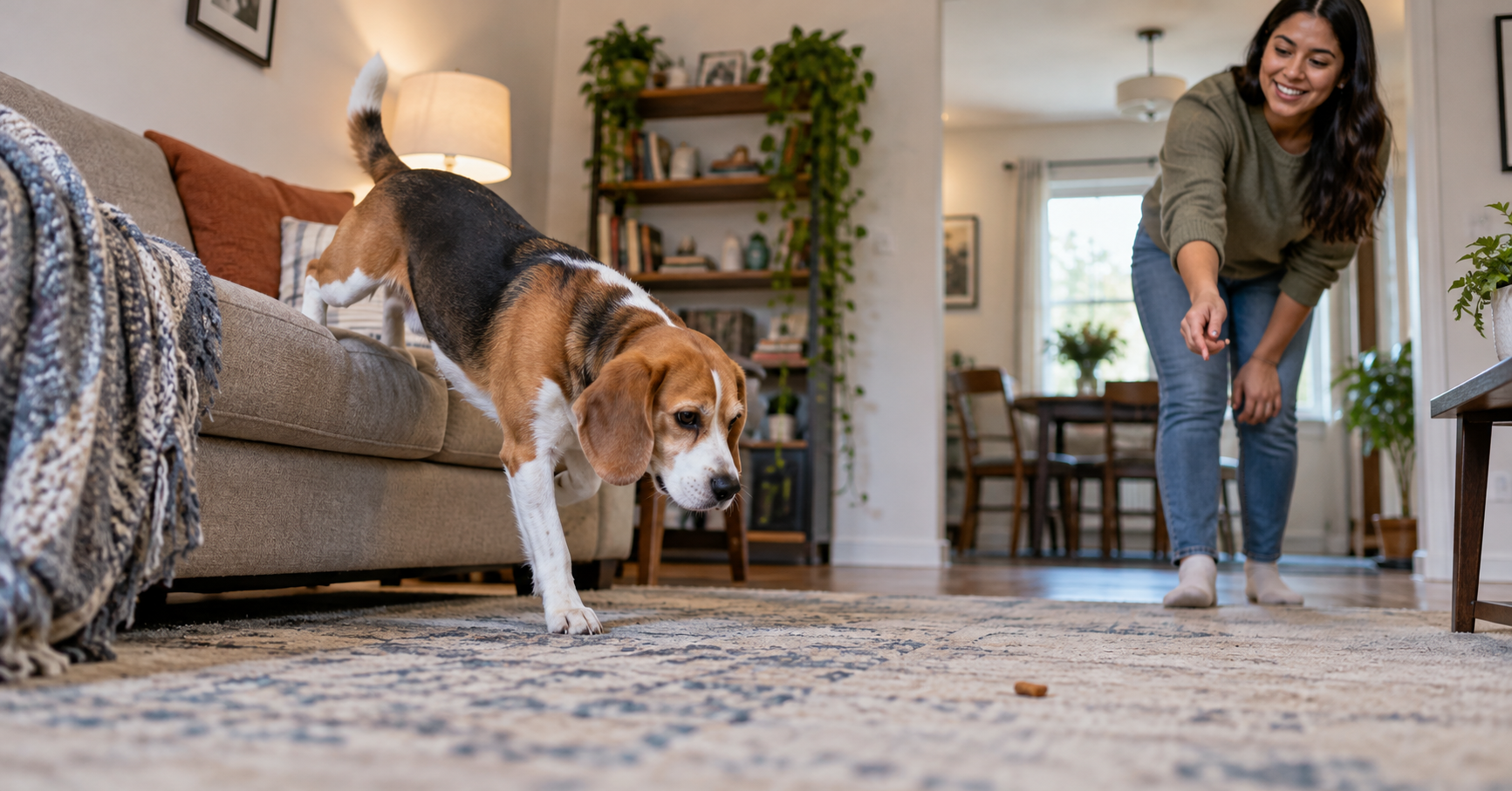
Choose somewhere the dog can land and continue moving without meeting a table leg, slippery floor, another pet, or your feet. Stand back and leave the route open.
During an easy rehearsal, invite the dog toward the floor with a small reward placed or tossed into that clear area. As all four paws reach the floor, say a brief “yes” to mark that movement and let the dog eat the reward. Have the food close enough that they can reach it as they arrive. Don’t ask for a sit at the same instant; first make the movement itself understandable.
Once you can predict the voluntary movement, say “off” just before the invitation. Over later repetitions, reduce the visible food prompt and reward after the dog moves in response to the cue. Use a different word for lying down. If “down” means both “put your elbows on the floor” and “leave the sofa,” the same word is asking for two different answers.
Avoid building an on-and-off reward loop
If every trip onto the couch earns a cookie for getting off, your dog may start offering the whole sequence. If that happens, look at what you’re repeatedly practicing before you decide to stop rewarding “off.”
Arrange practice yourself, keep it brief, and reward an appropriate resting place afterward. Between lessons, manage access according to the household rule. If furniture is off limits, don’t repeatedly invite the dog up just to rehearse getting down. Capture safe voluntary departures or practice an easier step with a trainer’s guidance.
If furniture is allowed by invitation, getting off doesn’t always have to end access permanently. You might cue off to straighten a blanket, then invite the dog back after the task. Keep permission clear so the dog can understand what changed.
What to do when the dog stays put
Say the cue once and watch. If the dog remains relaxed but doesn’t move, return to the familiar invitation in the next planned rehearsal and reward success. Check your position and the landing surface. Don’t keep advancing toward the dog while repeating the word.
If they move off and immediately return, you may need to teach the next destination. A comfortable mat or dog bed gives the dog somewhere useful to go while you use the furniture.
When your dog can leave comfortably on one cue and settle somewhere else, you have what you need for this household task. If asking them to move starts to feel like a confrontation, stop the exercise and get help with the situation before trying again.