If your dog barks while you eat, check that their basic needs are met and give them a comfortable place and activity before dinner starts. Then reward the quiet behavior you want. Waiting for repeated barking and paying for a brief pause can leave the whole bark-and-pause routine in place.
Dinner is a difficult time to improvise training. You’re hungry, the dog is close enough to watch every bite, and someone at the table may eventually share food just to get some peace. I’d change that setup before trying to win a contest of patience.
First work out what the barking is asking for
For a few meals, note when barking starts and what happens immediately afterward. Does someone hand over food? Does the dog need a bathroom trip? Are they distressed behind a gate, watching another dog eat, or reacting to activity outside?
The response should fit what you observe. Attention-seeking barking may be strengthened by table scraps or conversation. A dog who is frightened by separation needs a different plan. New or unusual vocalization, especially with restlessness, discomfort, appetite change, or confusion, is a reason to talk with your veterinarian.
Don’t assume that every bark is manipulation. You can meet a real need and still change how dinner works.
Set up your dog’s spot before you sit down
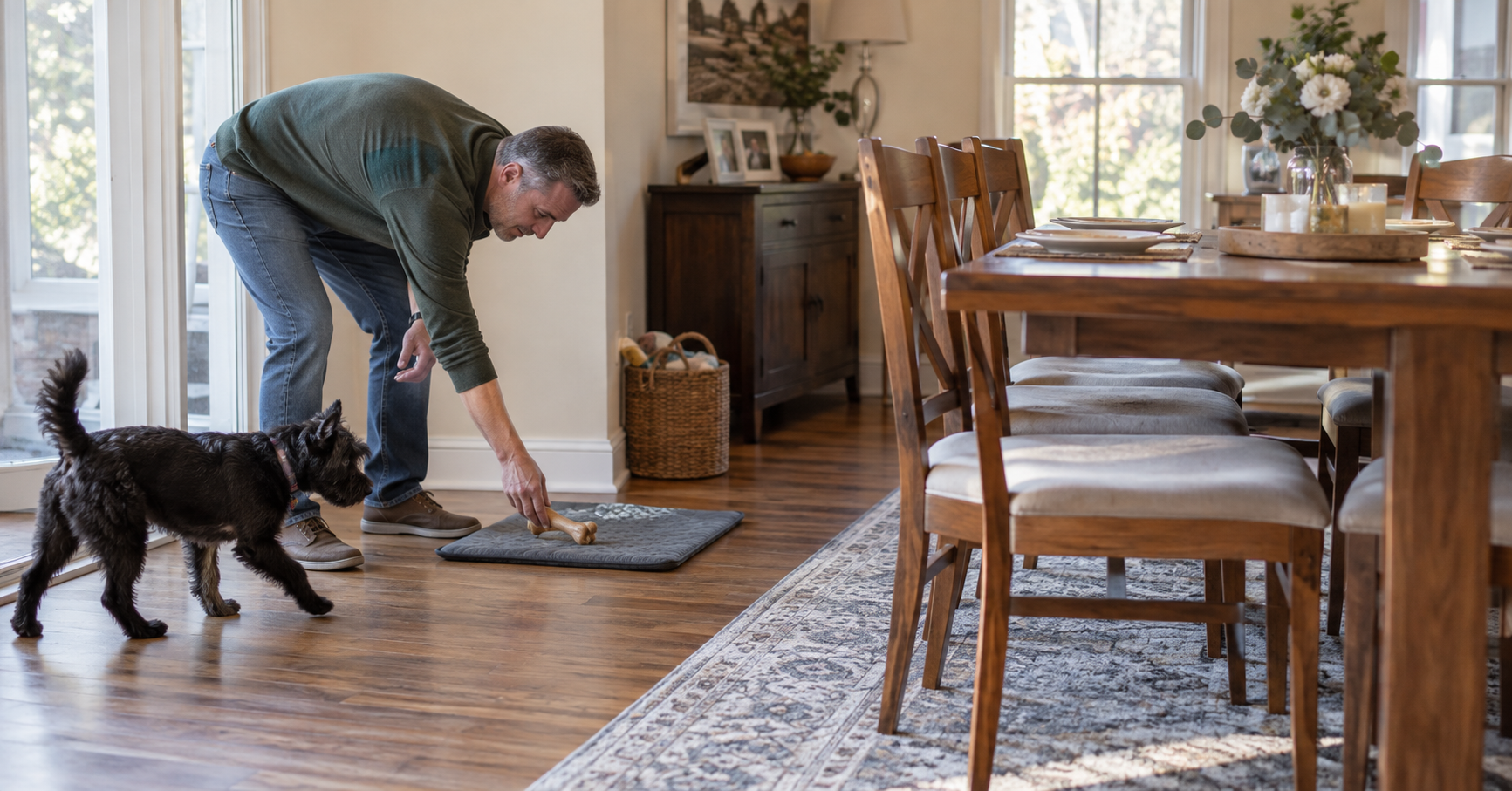
Pick a resting spot out of the path between the kitchen and the table. Give the dog a bathroom opportunity beforehand and arrange their normal meal or a suitable supervised activity in that area. Use food and chews appropriate for your dog’s health and swallowing habits, and account for treats in their daily food allowance.
If your dog already understands a mat, use it. If they don’t, teach settling on a mat when nobody is trying to eat. Dinner shouldn’t be the first test of a new skill.
A gate can keep the dog from visiting the table while you eat. But the dog must be able to rest there without panic, and food should be separated safely from other pets. Management and training do different jobs: the gate prevents access while the lesson teaches an alternative.
Practice a small version of dinner
Start when you have enough attention to help. Sit at the table with an empty plate for a short rehearsal while the dog uses their resting spot. Reward relaxed quiet behavior there before the dog starts asking at the table. Stand up and finish while the arrangement is still working.
Next, introduce a less tempting snack or part of your meal. Someone may need to deliver occasional rewards at the dog’s spot while another person eats. Keep delivery away from the table so the dog doesn’t have to visit your plate to succeed.
For example, a dog may manage thirty seconds while you drink water but struggle when the first hot plate appears. That tells you which change matters. Practice the appearance of a plate at an easier level instead of assuming the dog has forgotten everything.
When the barking starts anyway
Don’t shout across the room, reach from the table with scraps, or keep alternating “quiet” with cookies after every bark. Pause the rehearsal, check the dog’s needs, and make the next attempt easier. If barking began as soon as the plate appeared, go back to the empty-plate practice and finish before the barking starts; don’t keep presenting food and waiting for a bark-pause-cookie sequence. When the family needs to eat, use an arrangement your dog is already comfortable with and save the practice for a time when you can help.
If barking increases with pacing, escape attempts, refusal of normally valued food, or inability to settle, stop treating it as a simple request for attention. Arrange individualized professional help. Don’t leave a distressed dog confined until they give up.
Make the household agreement specific
Everyone should know where the dog eats, where rewards are delivered, and what to do when the setup becomes too difficult. One person feeding under the table can undo the arrangement without meaning to.
If your dog can stay comfortable while everyone sits down but starts barking when food arrives, that’s where to make the next rehearsal easier. You don’t have to get through a whole dinner to have something worth building on.